Public amenities, schools, and commercial buildings are under increasing pressure to reduce water use while maintaining hygiene and durability. Urinals are a significant factor in water consumption, which is why water-saving urinals have become the preferred choice over traditional flush systems.
At Marko Stainless, we fabricate stainless steel urinals designed for heavy use in schools, councils, and public spaces. Many of our products can be paired with WELS-certified flushing systems and are WaterMark compliant, ensuring they meet strict Australian standards. In this article, we’ll compare water-saving urinals with traditional systems and explain why stainless steel is the most durable and sustainable option.

Traditional Urinals – The Old Standard
Traditional urinals typically use a fixed amount of water with every flush, often several litres per use. In high-traffic environments like schools or shopping centres, this leads to:
- High water bills due to excessive consumption
- Inconsistent flushing performance
- Ongoing maintenance costs
While traditional urinals have served their purpose for decades, they are no longer aligned with modern water efficiency goals or sustainability standards.

Water-Saving Urinals – The Smarter Choice
Water-saving urinals use significantly less water than traditional models. Some systems reduce consumption to as little as 0.8–1.5 litres per flush, while others are waterless, relying on trap systems and special sealants.
Benefits of Water-Saving Urinals:
- Reduced Costs – Lower water use translates directly into savings on utility bills.
- Sustainability – Supports green building initiatives and environmental targets.
- Compliance – Meets WELS certification standards required for new projects.
- Low Maintenance – Modern designs are easier to clean and maintain.
In large facilities such as schools, even a small reduction in water use per flush results in significant cost savings each year.

WELS and WaterMark Compliance
In Australia, urinals and tapware must comply with key certification standards:
- WELS (Water Efficiency Labelling and Standards): Rates water efficiency of fixtures. A WELS-certified urinal guarantees low water consumption and compliance with government regulations.
- WaterMark Certification: Confirms that plumbing fixtures meet Australian standards for performance and safety.
At Marko Stainless, we design stainless urinals that integrate seamlessly with WELS-certified flushing systems and are WaterMark compliant, giving builders and architects confidence their installations meet all requirements.

Why Stainless Steel Urinals?
Choosing stainless steel for urinals provides benefits that go beyond water savings:
- Durability: Resistant to corrosion, vandalism, and impact.
- Hygiene: Non-porous surface resists bacteria build-up and is easy to disinfect.
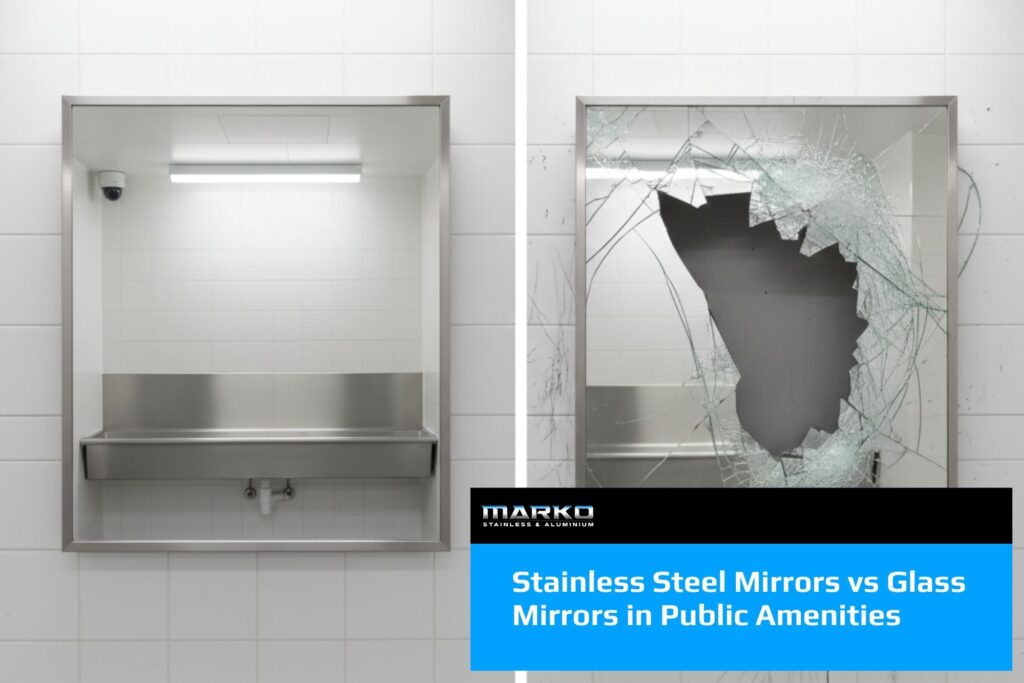
- Vandal Resistance: Unlike porcelain or ceramic, stainless won’t shatter or chip.
- Longevity: Built to last decades, even in heavy-use public environments.
This makes stainless urinals the ideal choice for schools, shopping centres, transport hubs, and public amenities.

Applications in Schools
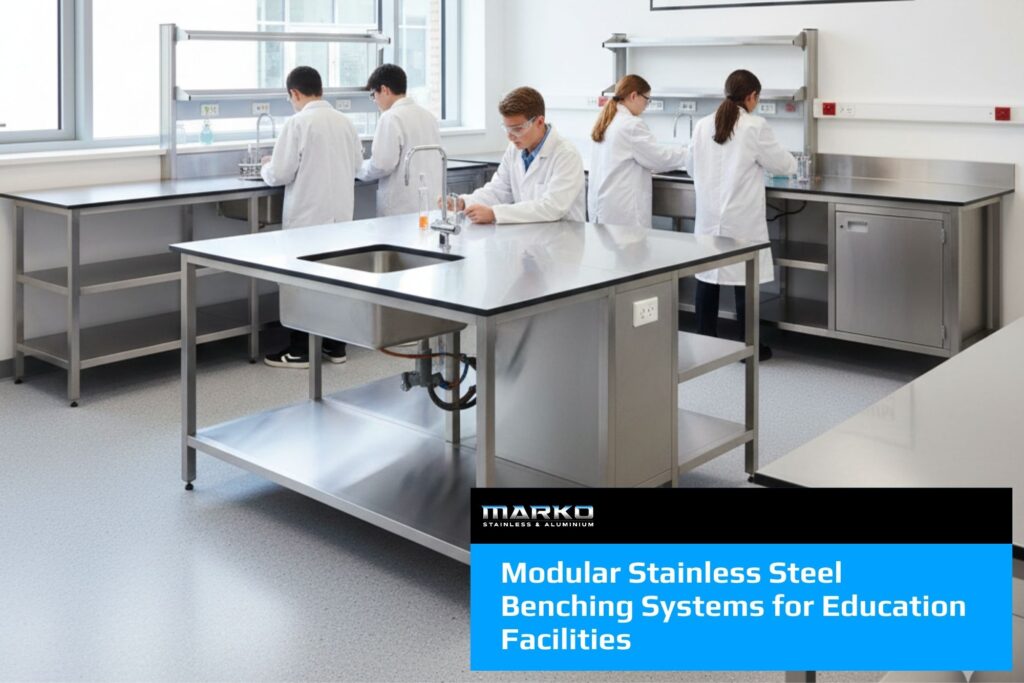
Schools are major beneficiaries of water-saving stainless steel urinals. With hundreds of students using facilities daily, the reduction in water consumption can save thousands of litres each week. Importantly, Marko Stainless school urinals are fabricated to EFSG standards, ensuring they are compliant with Education Facilities guidelines.

Applications in Public Amenities
In council-owned bathrooms, parks, and transport hubs, urinals need to be vandal-resistant, low maintenance, and cost-efficient. Stainless water-saving urinals meet all these needs, providing local governments with a practical and long-lasting solution.

Custom Fabrication Options
At Marko Stainless, we can fabricate urinals to suit specific project requirements:
- Wall-hung urinals for compact washrooms
- Trough-style urinals for schools and sports facilities
- Custom lengths to fit architectural layouts
- Integration with WELS-certified flushing systems
This ensures that every project, from a small community centre to a large school campus, has the right urinal setup for its needs.

Why Choose Marko Stainless?
- Over 30 years of stainless steel fabrication expertise
- ASSDA accredited fabricator for quality assurance
- EFSG compliant school urinals
- Integration with WELS-certified and WaterMark compliant flushing systems
- Trusted supplier to schools, councils, and builders nationwide

Conclusion
The shift from traditional urinals to water-saving urinals is not just about compliance — it’s about reducing costs, supporting sustainability, and ensuring long-term durability. By choosing stainless steel urinals fabricated by Marko Stainless, builders, architects, and schools gain fixtures that are hygienic, vandal-resistant, and compliant with Australian standards.
Contact Marko Stainless today to discuss our range of water-saving stainless steel urinals for schools, public amenities, and commercial projects.