For architects and builders, material selection determines how a project performs over decades, not just at handover. Stainless steel has become a trusted choice across commercial and residential construction because it combines corrosion resistance, design flexibility, and low lifecycle cost in a single material.
This article explains the core advantages of stainless steel, the factors that influence grade selection, and why it continues to be specified in demanding environments across Australia.
Last reviewed: August 2026
Why Architects and Builders Choose Stainless Steel
Stainless steel earns its place in architectural specifications because it solves several problems simultaneously. A single material can handle wet environments, heavy use, hygiene requirements, and visual standards without needing protective coatings, frequent replacement, or specialist maintenance regimes.
For commercial projects in particular, the lifecycle cost argument can be compelling. A correctly specified fixture that requires minimal upkeep, resists damage and provides a long service life may offer better whole-of-life value than a cheaper alternative that needs more frequent maintenance or replacement.
Specifying stainless steel shifts the cost conversation from purchase price to performance over time.
This combination of practical performance and visual appeal explains why stainless steel is specified across commercial kitchens, hospitals, schools, laboratories, transport infrastructure, and high-end residential builds.
Durability and Longevity in High-Traffic Environments
Stainless steel derives its corrosion resistance from a passive chromium oxide layer that forms on the surface when exposed to oxygen. This layer is self-repairing: if the surface is scratched, the layer reforms under normal conditions without any treatment required.
The result is a material that resists rust, staining, and surface degradation in environments where moisture, heat, and heavy contact are constant factors.
Key durability characteristics relevant to construction projects:
- Corrosion resistance: The passive layer protects against moisture, food acids, cleaning chemicals, and many industrial environments. Grade selection determines the level of protection (covered below).
- Impact resistance: Stainless steel resists knocks, dropped equipment and trolley impacts, and it does not shatter like brittle materials. It can still dent or scratch under sufficient force, so thickness, support and finish should suit the application.
- Temperature tolerance: It performs across a wide temperature range, making it suitable for applications from commercial cooking environments to refrigeration.
- Service life: Correctly specified, fabricated and maintained stainless steel can provide a long service life in commercial environments, reducing replacement frequency and waste.
When comparing material options for a project, understanding how durability and cost interact across different metals is worth examining. A detailed comparison of the performance trade-offs between stainless and aluminium alloys is useful for projects where weight, budget, or environmental exposure creates genuine ambiguity about which material to specify.
Low Maintenance and Hygiene Benefits
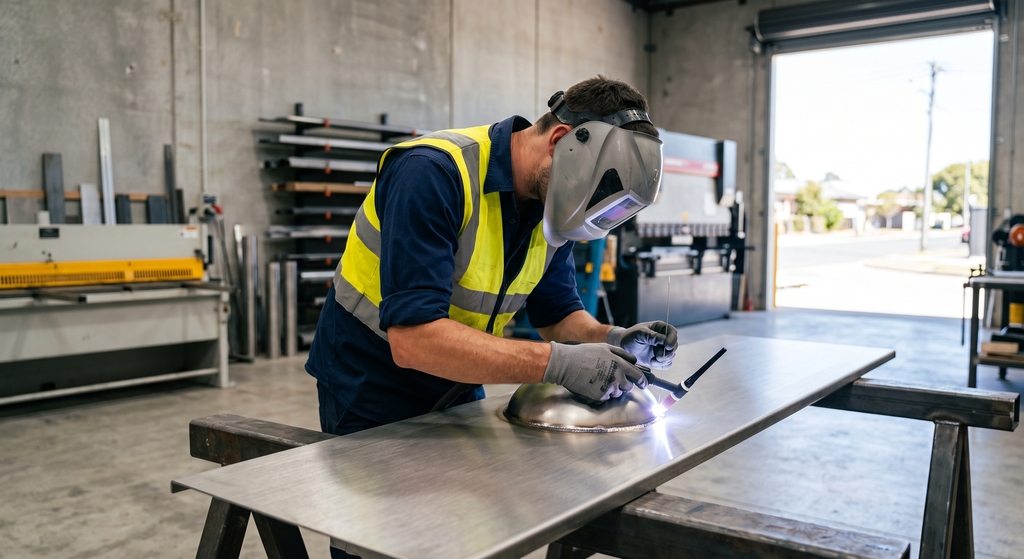
Stainless steel’s smooth, non-porous surface is one of its most practical features in hygiene-sensitive environments. Properly fabricated surfaces are straightforward to clean, while welded construction can reduce joints and crevices where residue may collect.
These characteristics make stainless steel a common choice for food preparation areas, healthcare facilities, aged care environments and school canteens. Compliance depends on the complete design, fabrication, installation and cleaning regime, not the material alone.
For routine maintenance, mild detergent and warm water remove most contamination without specialist products. For healthcare and food-grade applications, standard sanitising agents are compatible with stainless steel without damaging the surface. Detailed guidance on appropriate cleaning methods and products is available in a practical guide to cleaning and maintaining stainless steel for different grades and finishes.
Maintenance considerations by environment:
| Environment | Key hygiene concern | Recommended practice |
| Commercial kitchen | Grease, food acids, heat | Daily clean with neutral detergent, periodic sanitise |
| Hospital or aged care | Pathogen control | Approved disinfectants compatible with stainless; avoid bleach concentration above manufacturer guidance |
| School or public facility | High-contact surfaces, vandalism | Regular wipe-down; inspect welds and joins for buildup |
| Laboratory | Chemical exposure | Check grade compatibility with specific reagents before specifying |
Aesthetic Appeal and Design Versatility
Stainless steel offers a contemporary finish that works across a range of architectural styles, from industrial fitouts to minimalist residential interiors. Its neutral, reflective quality means it does not dominate a palette but instead sits comfortably alongside timber, stone, concrete, glass, and coloured surfaces.
The range of available finishes extends the design possibilities considerably:
- Brushed finish: A directional grain finish that softens reflectivity and is widely used for commercial benches, sinks and architectural items.
- Orbital finish: A non-directional patterned finish that is popular for custom stainless steel benchtops and helps make day-to-day marks less visually prominent.
- Mirror finish: A highly reflective finish used where appropriate, including stainless steel mirrors and selected architectural applications.
For benchtop applications specifically, surface finish selection affects both aesthetics and practical performance. Stainless steel benchtops fabricated to custom dimensions demonstrate how finish choice and edge profile interact in a working commercial or residential context.
Environmental and Sustainability Advantages
Stainless steel is fully recyclable at end of life, and a significant proportion of new stainless steel is produced from recycled content. According to the World Stainless Association (worldstainless.org), stainless steel has a global average recycled content of around 60%, with the recycling rate at end of life exceeding 85%.
For architects and builders working toward green building ratings or sustainability commitments, stainless steel supports several criteria:
- Recyclability: 100% recyclable with no degradation of material properties across recycling cycles.
- Durability reduces replacement: A material that lasts decades in service contributes less to construction waste over a building’s life than materials requiring periodic replacement.
- No coatings or treatments required: Unlike some metals, stainless steel does not require paint, galvanising, or chemical treatments to maintain performance, which reduces associated chemical use and waste.
- Australian fabrication: Working with an Australian fabricator can reduce the need to import finished products and allows dimensions, details and finishes to be tailored to the project.
The Australasian Stainless Steel Development Association (ASSDA, assda.asn.au) provides technical guidance on sustainable use and grade selection for the Australian construction market.
Grade Selection: Choosing the Right Stainless Steel for Your Project
Not all stainless steel performs equally in all environments. The two grades most commonly specified in Australian architectural and construction applications are 304 and 316. Selecting the wrong grade for the environment is a common source of early corrosion problems, particularly in coastal or industrial locations.
304 vs 316: Key Differences
| Property | Grade 304 (typical range) | Grade 316 (typical range) |
| Chromium content | 18–20% | 16–18% |
| Nickel content | 8–10.5% | 10–14% |
| Molybdenum | None intentionally added | 2–3% |
| Corrosion resistance | Good: suitable for most interior and sheltered exterior applications | Superior: recommended for coastal, marine, and high-chloride environments |
| Typical applications | Commercial kitchens, interior benchtops, sinks, school fixtures | Coastal facades, outdoor handrails, marine infrastructure, pools |
| Relative cost | Lower | Higher |
The addition of molybdenum in 316 provides significantly improved resistance to chloride-induced pitting corrosion. In practice, this means:
- For coastal or chloride-exposed projects, grade selection should consider the site’s actual exposure, finish, orientation and cleaning regime. Grade 316 generally provides better resistance than grade 304 in these conditions.
- For indoor applications without chloride exposure, 304 performs well and represents better value.
- For swimming pools and pool surrounds, 316 is strongly recommended due to chlorinated water exposure.
If a project site falls in an area of industrial air pollution or proximity to desalination infrastructure, a material specialist or reference to ASSDA technical documentation should be consulted before finalising grade selection.
Customisation Options for Commercial and Residential Projects
One of the practical advantages of working with a dedicated stainless steel fabricator is the ability to design fixtures to precise project specifications rather than adapting standard products to a space.
At Marko Stainless & Aluminium, customisation options include:
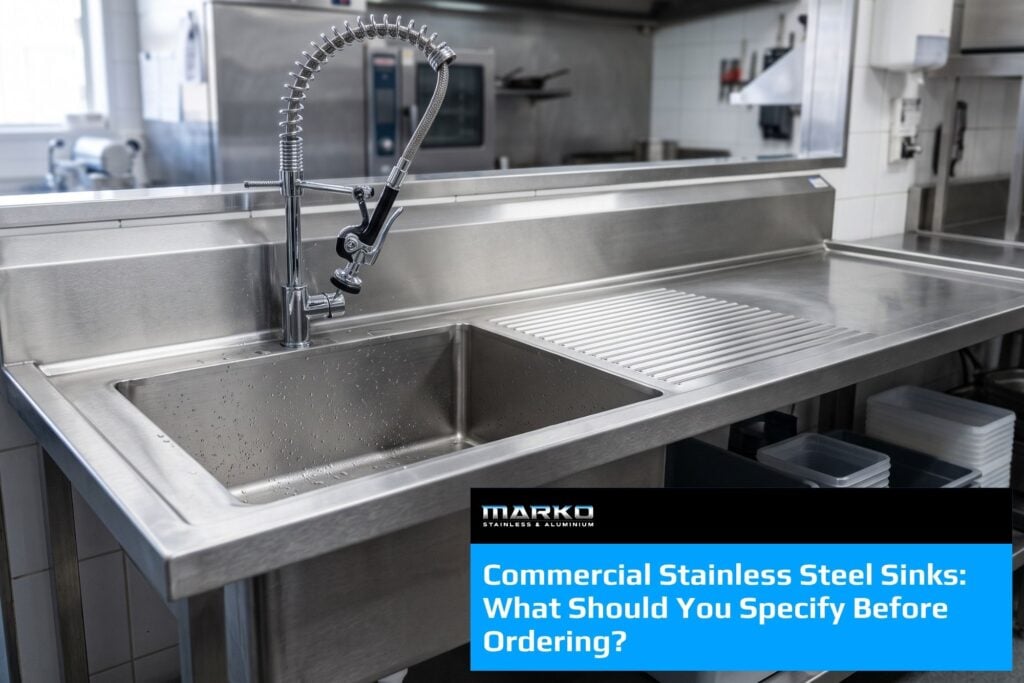
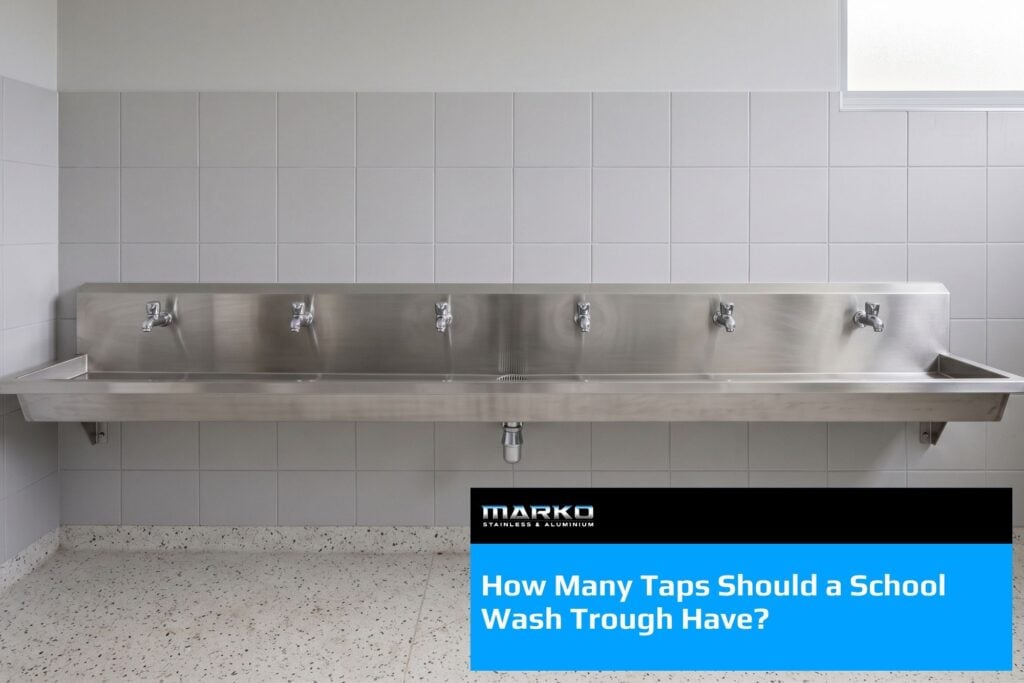
- Tailored dimensions: Sinks, wash troughs, benchtops, and other fixtures fabricated to the exact dimensions of the installation space.
- Finish selection: Brushed and orbital finishes are commonly used for benchtops and fabricated equipment, with mirror finish available for suitable products and applications.
- Edge profiles: Square, rounded, folded, or custom profiles to suit substrate, safety, and aesthetic requirements.
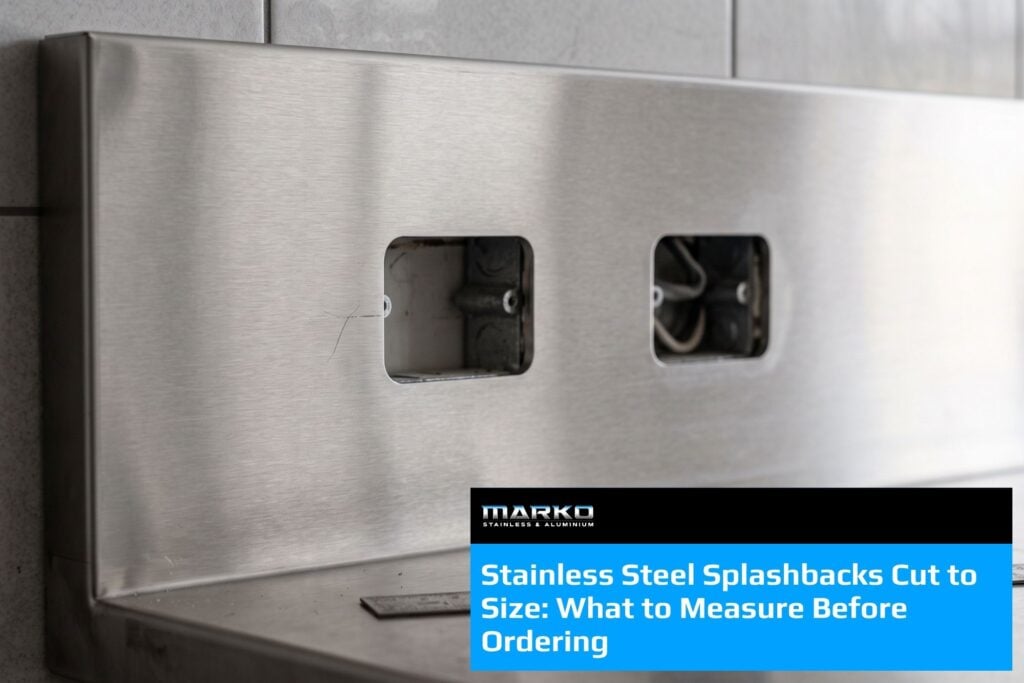
- Integrated features: Built-in draining boards, splashbacks, under-bench storage, drainage systems, and tap hole placement.
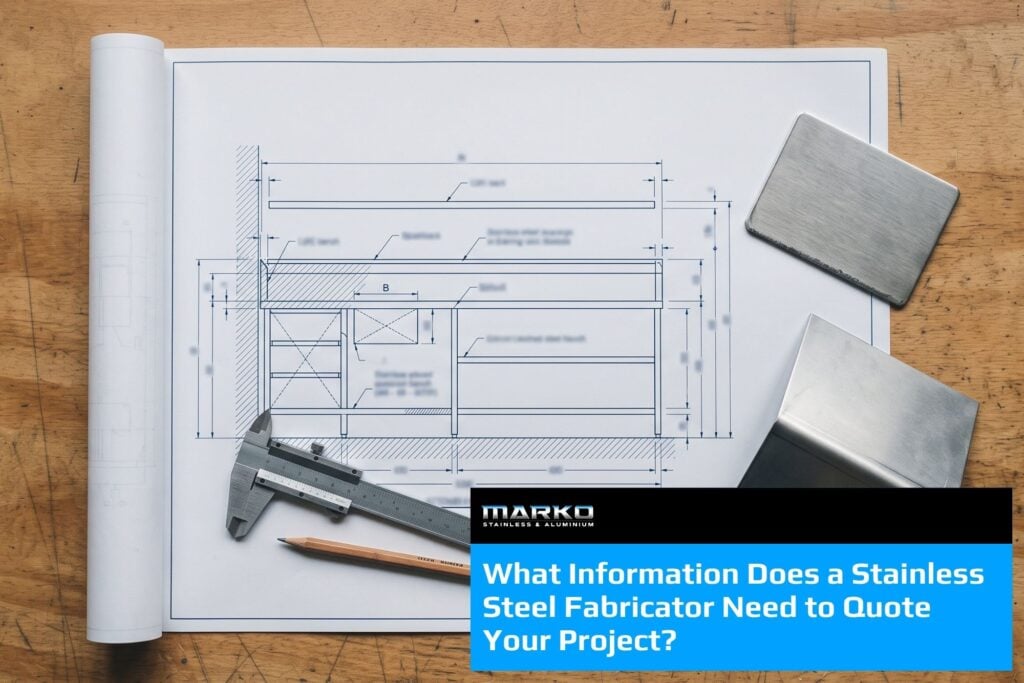
- Project requirements: Products can be fabricated to documented project dimensions, details and applicable requirements once these have been confirmed for the particular application.
This level of specification is particularly relevant for commercial kitchen fit-outs, healthcare facilities, and school projects where standard catalogue sizes rarely align with the actual space and workflow requirements.
Frequently Asked Questions
What are the main advantages of stainless steel for builders?
The primary advantages are corrosion resistance, durability under heavy use, hygiene performance, low maintenance requirements, and design flexibility. For builders, the practical benefit is a material that performs reliably over a long service life without requiring specialist coatings, treatments, or frequent replacement.
This reduces both maintenance costs and the likelihood of defect callbacks related to surface degradation.
Which stainless steel grade is best for architectural applications in coastal areas?
Grade 316 is commonly specified for coastal and chloride-exposed environments because its molybdenum content provides better resistance to chloride-induced pitting than grade 304. The final selection should be based on the project’s actual exposure, finish and maintenance requirements. Grade 304 remains widely used for many interior applications where chloride exposure is limited.
Is stainless steel a sustainable building material?
Yes. Stainless steel is 100% recyclable and retains its material properties through multiple recycling cycles. The World Stainless Association reports a global average recycled content of around 60% for new stainless steel production and an end-of-life recycling rate exceeding 85%.
Its long service life also means fewer replacements over a building’s operational period, which reduces material consumption and construction waste over time.
What stainless steel products are commonly specified by architects?
Common architectural specifications include custom sinks and wash troughs for commercial kitchens and healthcare facilities, benchtops for food preparation and laboratory environments, handrails and balustrades for interior and exterior use, wall cladding and feature panels, floor wastes and drainage fixtures, and vandal-resistant bathroom fixtures for public buildings.
The right product specification depends on the grade, finish, and dimensional requirements of the specific environment.
About Marko Stainless & Aluminium
Marko Stainless & Aluminium has fabricated custom stainless steel and aluminium products in Australia since 1994. The business is an ASSDA Accredited Fabricator with experience across education, commercial, hospitality, healthcare and architectural projects.