Drinking facilities in schools, parks and sporting amenities need to accommodate frequent daily use, straightforward cleaning and the conditions at the installation site. The most suitable arrangement is not determined by material alone. User numbers, exposure, mounting, accessibility, tapware, drainage and plumbing connections should all be resolved before fabrication or ordering.
Stainless steel is commonly selected because a properly fabricated and finished surface is durable, non-porous and readily cleanable. It can also be fabricated into wall-mounted fountains, freestanding units and multi-user drinking troughs to suit different buildings and user groups.
Start with the way the facility will be used
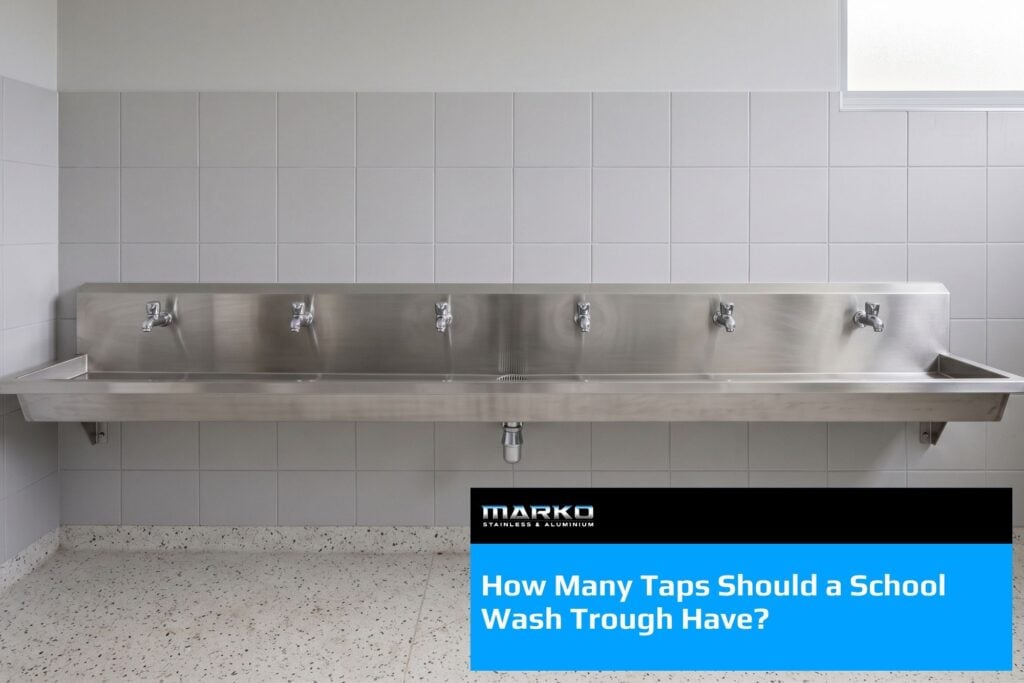
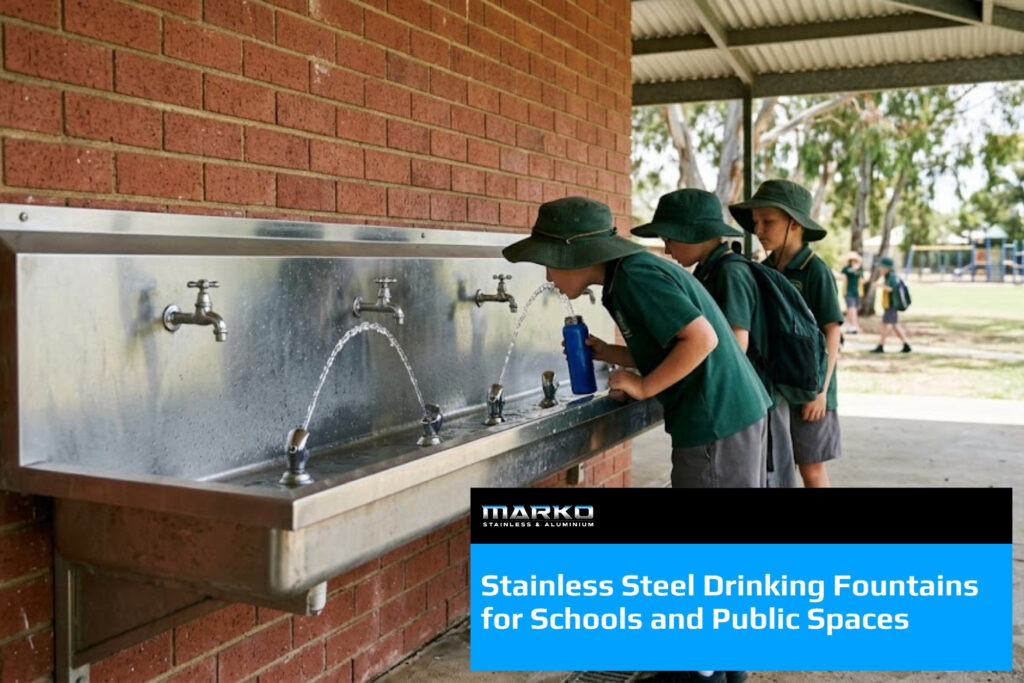
A single drinking point may suit a low-traffic indoor location. A multi-user drinking trough is often more practical near playgrounds, sports areas, change rooms and other locations where several students or visitors may need water at the same time.
Before selecting a configuration, confirm:
- The expected number and age range of users.
- Whether the unit will be indoors, sheltered outdoors or fully exposed.
- Whether bubblers, bottle fillers or a combination are required.
- The available wall structure, floor space and plumbing positions.
- Any accessibility requirements contained in the project documentation.
- Cleaning access, drainage and the likelihood of impact or misuse.
Choosing between grade 304 and grade 316
Grade 304 stainless steel is widely used for indoor and sheltered applications. Grade 316 contains molybdenum, which improves resistance to chloride-related corrosion and is commonly considered for coastal or more aggressive environments.
Grade selection should not be reduced to a simple indoor-versus-outdoor rule. Distance from surf, salt deposition, exposure to rain washing, surface finish, crevices and the maintenance program all affect performance. ASSDA recommends grade 316, or an equivalent corrosion-resistant grade, as a minimum within five kilometres of surf exposure. Critical splash zones, rough surfaces or unwashed locations may require a higher grade or additional design consideration.
The project specification and actual exposure conditions should therefore be reviewed before the grade and finish are confirmed.
Tapware, bottle fillers and WaterMark requirements
The stainless steel basin or trough is only one part of the drinking facility. Bubblers, bottle fillers, valves, wastes and other plumbing components must also suit the project and the relevant Australian requirements.
WaterMark requirements apply according to the product category. Drinking fountains and bottle fillers are listed within the WaterMark appliance schedule, while drinking-fountain tapware is covered within the tapware schedule. The applicable components should be checked against the current WaterMark Product Database, and the complete installation should be reviewed by the project hydraulic consultant or licensed plumber.
From 1 May 2026, relevant copper-alloy plumbing products used with drinking water must also meet the NCC lead-free requirements. Current product certification should be verified when the tapware is selected.
Planning school drinking facilities
School projects may require different mounting heights or arrangements for different student groups. They may also require an accessible drinking point at each nominated drinking-fountain location, depending on the applicable project standards and documentation.
For NSW public school projects, drinking facilities can be manufactured to suit NSW School Infrastructure EFSG requirements where applicable and where those requirements form part of the agreed project specification. The architect, hydraulic consultant and builder should confirm the current project requirements before fabrication.
Common installation locations
| Location | Points to confirm |
| Playgrounds and outdoor areas | Weather exposure, grade, drainage, user volume and impact resistance |
| Sporting facilities and change rooms | Peak demand, bottle filling, robust mounting and cleaning access |
| Corridors and covered walkways | Projection into circulation space, wall support and suitable mounting height |
| Canteens and eating areas | Traffic flow, drainage, proximity to food-service areas and cleaning access |
| Public parks and council amenities | Coastal exposure, vandal resistance, servicing and maintenance access |
Custom fabrication and site coordination
Existing plumbing positions, structural constraints and surrounding finishes do not always align with a standard catalogue unit. Custom fabrication allows the dimensions, mounting details, splash protection, tapware positions and plumbing connections to be coordinated with the actual site.
Marko Stainless & Aluminium manufactures stainless steel drinking fountains and drinking troughs for schools, builders, councils and commercial projects. Providing drawings, user requirements, nominated tapware and service locations early helps reduce changes during fabrication and installation.
Cleaning and maintenance
Cleaning frequency should reflect the number of users and the facility-management plan. Use a soft cloth and a cleaner suitable for the selected stainless steel finish. Remove debris from wastes, address mineral deposits before they build up and inspect the tapware, drainage and fixings at appropriate intervals.
Avoid steel wool, carbon-steel brushes and unsuitable abrasive products, as they can scratch the surface or introduce contamination. Cleaning products containing chlorides or strong chemicals should only be used when confirmed as suitable for the stainless grade, finish and manufacturer instructions.
Frequently Asked Questions
Is grade 316 required for every outdoor drinking fountain?
No. Grade selection depends on the severity of the environment, salt exposure, finish, design and maintenance. Grade 316 is commonly considered for coastal exposure, but critical locations may require further advice.
Can a drinking facility include both bubblers and bottle fillers?
Yes. The arrangement should be planned around user numbers, spacing, accessibility, water supply and drainage.
Can mounting heights be customised?
Yes. Heights and configurations can be fabricated to suit the agreed project documentation and intended users.
Does the stainless steel fabrication itself carry WaterMark certification?
WaterMark applies according to the relevant plumbing product category. The fountain, bottle filler, tapware and other components should be checked against current WaterMark requirements with the project plumber or hydraulic consultant.
Get in Touch
Contact Marko Stainless & Aluminium for code-compliant stainless steel drinking fountains manufacturing and installation for school and public spaces in NSW.