Introduction
The terms stainless steel bench and stainless steel benchtop are often used interchangeably, but they do not always mean the same thing. For builders, architects, schools, and commercial clients, understanding the difference is important when planning a fitout, comparing quotes, and making sure the right product is being specified.
At Marko Stainless and Aluminium, we fabricate both stainless steel benches and countertops for a wide range of projects. While the two are closely related, they serve different purposes depending on the layout and the way the space will be used. Knowing which one you actually need helps improve functionality, reduce confusion, and make sure the final product suits the environment.
What Is a Stainless Steel Benchtop?
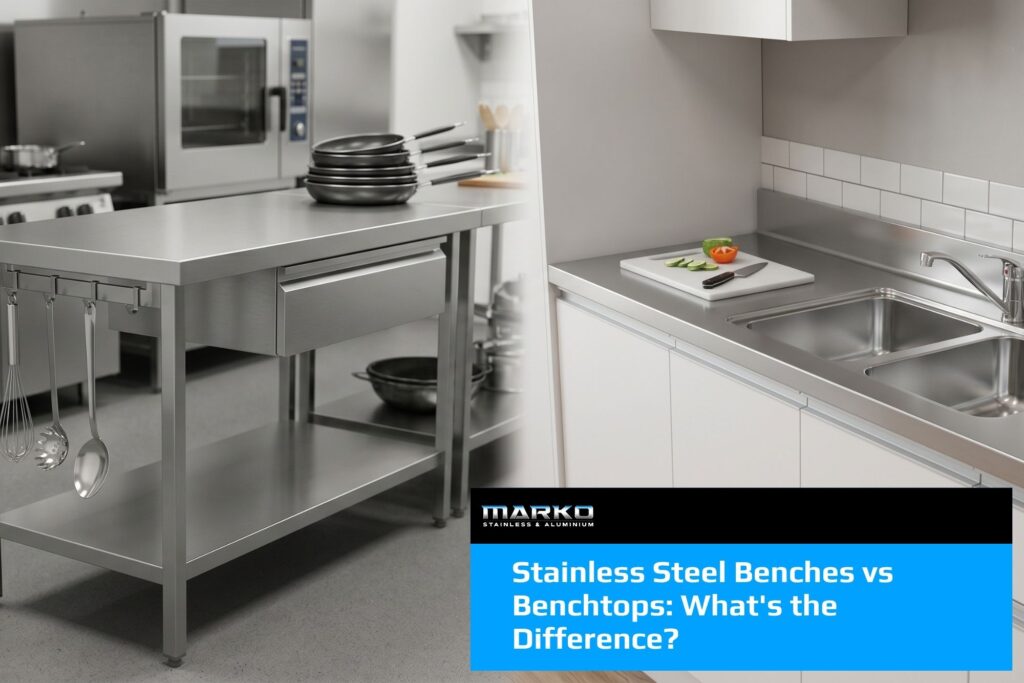
A stainless steel benchtop generally refers to the top working surface only. It is the flat stainless steel surface used in food preparation areas, laboratories, wash areas, workshops, and other practical environments where hygiene and durability matter.
A stainless steel benchtop may be:
- installed over existing cabinetry or framework
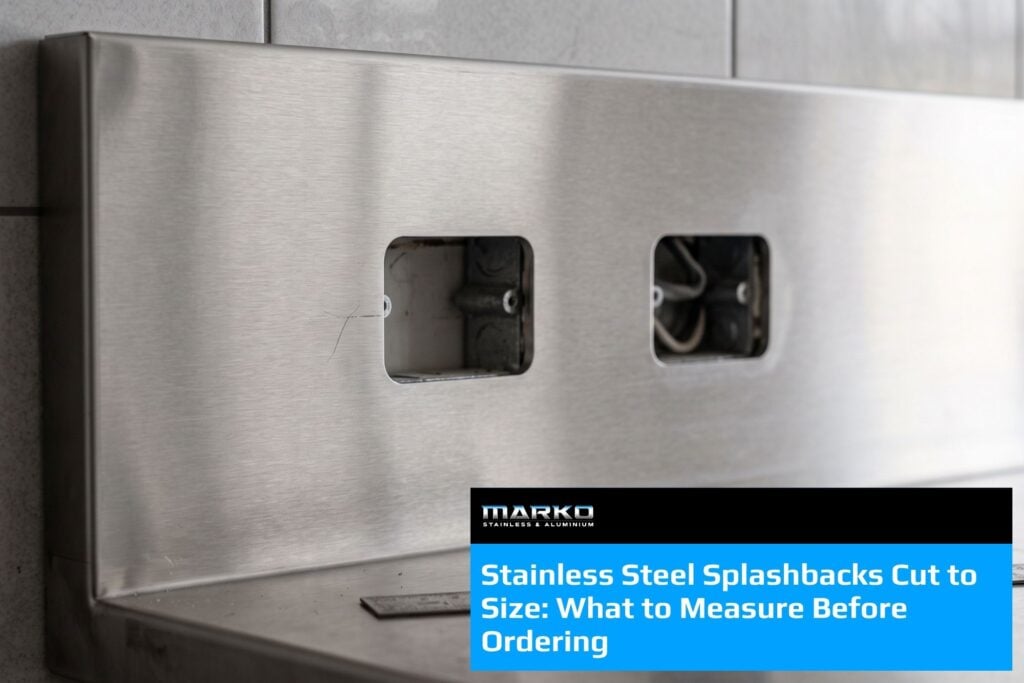
- fabricated with splashbacks, upstands, or cut-outs
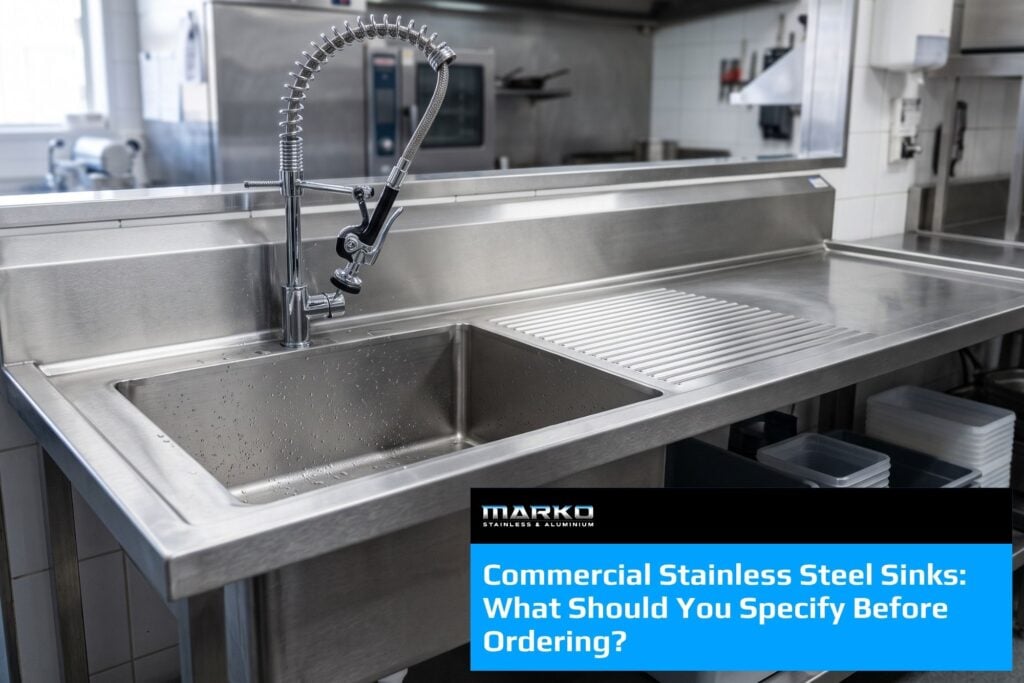
- integrated with stainless steel sinks, basins, or equipment
- supplied as part of a larger built-in fitout
In simple terms, the benchtop is usually the surface itself, not necessarily the full bench structure.
What Is a Stainless Steel Bench?
A stainless steel bench usually refers to the complete unit, not just the top surface.
This often includes:
- the benchtop surface
- legs or structural frame
- an undershelf or lower shelf
- optional cupboards, drawers, or integrated storage
A stainless steel bench is typically freestanding or self-supporting, making it a more complete working fixture.
This is why the term stainless steel bench is often more accurate when talking about:
- commercial kitchen benches
- workshop benches
- canteen benches
- freestanding preparation benches
- benches with storage or shelving below
The Simple Difference
The easiest way to explain it is:
- Benchtop = the top surface
- Bench = the full supported unit
That distinction matters because the wording affects quoting, fabrication, installation, and expectations around what is actually being supplied.
When a Stainless Steel Benchtop Is the Better Choice
A stainless steel benchtop is often the better option when:
- the cabinetry or support structure already exists
- only the work surface needs to be upgraded
- the fitout is more joinery-based than freestanding
- the layout needs a cleaner, more integrated built-in look
- cut-outs are required for sinks, taps, or equipment
This is common in:
- food technology rooms
- commercial kitchen refurbishments
- laboratory spaces
- healthcare preparation rooms
- custom joinery-based projects
In these applications, the benchtop forms part of a wider built-in solution rather than acting as a standalone item.
When a Stainless Steel Bench Is the Better Option
A stainless steel bench is usually the better option when:
- a complete freestanding workstation is required
- storage beneath the surface is needed
- the installation needs to be simple and self-contained
- the bench may need to be moved or replaced in the future
- the project calls for a complete work unit rather than just a top surface
Stainless steel benches are commonly used in:
- commercial kitchens
- canteens
- hospitality preparation areas
- workshops and trade rooms
- industrial and utility areas
Because they include the structure as well as the top, benches usually offer a more complete working solution.
Benches and Benchtops in School Projects
In education projects, both stainless steel benches and stainless steel benchtops can be useful, but they often serve different functions.
For example:
- food technology rooms may use built-in benchtops over cabinetry
- canteens may require freestanding benches with undershelves or storage
- science and practical learning spaces may use benchtops integrated with sinks and services
- workshop areas may require heavier-duty benches designed for harder use
The right choice depends on how the room is used, how much flexibility is needed, and whether the layout is built-in or freestanding.
Benches and Benchtops in Commercial Kitchens
Commercial kitchens often use both stainless steel benches and stainless steel benchtops within the same fitout.
For example:
- benchtops may be used for built-in cooking lines or fixed preparation runs
- benches may be used for freestanding prep stations, wash areas, or work zones with storage underneath
That is why it is important not to treat the two terms as identical. In many kitchens, both are needed, but in different parts of the room.
Why the Difference Matters When Comparing Quotes
One of the most common causes of confusion in stainless steel quoting is when a “bench” is used to describe a benchtop, or a “benchtop” is used when a full bench unit is actually required.
If the scope is unclear, this can lead to:
- incorrect assumptions about supports or legs
- missing storage or shelving
- inaccurate price comparisons
- unexpected variations
- installation delays
- product mismatches
For builders and specifiers, using the correct term improves communication and helps ensure the product being quoted is the product actually needed.
Custom Fabrication Gives You More Control
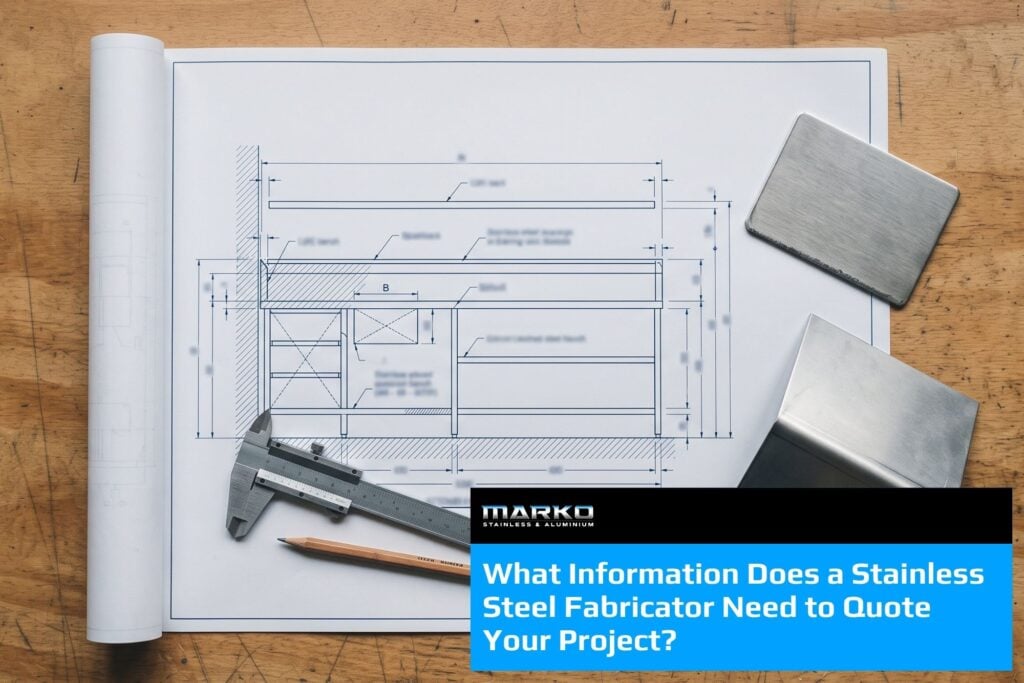
At Marko Stainless and Aluminium, we fabricate both custom stainless steel benchtops and custom stainless steel benches. This allows the final product to be built to suit:
- the available space
- the intended workflow
- support requirements
- hygiene and cleaning needs
- storage requirements
- integration with sinks, splashbacks, and surrounding fixtures
Whether the project needs a built-in benchtop, a freestanding bench, or a combination of both, custom fabrication gives more control over the final result.
Why Choose Marko Stainless and Aluminium?
- Clear product understanding: We help identify whether a bench or benchtop is the right solution for the application
- Custom fabrication capability: Benches and benchtops made to suit exact project requirements
- Experience across schools, kitchens, and workplaces: Practical solutions for real-world environments, including products suited to EFSG-related school applications
- ASSDA accredited fabricator: Confidence in stainless steel workmanship and technical knowledge
- Established since 1994: Proven experience delivering durable stainless steel solutions
Conclusion
While the terms are often used loosely, stainless steel benches and stainless steel benchtops are not always the same thing. A benchtop is usually the working surface only, while a bench is typically the complete supported unit.
Understanding that difference helps builders, architects, and facility managers specify more accurately, compare quotes more clearly, and choose the best solution for the project. Whether the goal is a built-in benchtop, a freestanding work bench, or a broader stainless fitout, using the right term from the start usually leads to a better outcome.
Call to Action
Contact Marko Stainless and Aluminium to discuss stainless steel benches, stainless steel benchtops, and custom fabrication solutions for your next project.