Introduction
Choosing the right stainless steel wash trough size is one of the most important decisions when planning a school, workplace, or public amenity fitout. A trough that is too short can create crowding and poor handwashing flow, while one that is oversized can waste wall space and budget.
At Marko Stainless and Aluminium, we fabricate stainless steel wash troughs for schools, workshops, workplaces, and commercial projects. One of the most common questions is simple: what size wash trough do you need?
The answer depends on how the trough will be used, how many people need access at once, and whether the project needs to meet EFSG requirements, which is especially important in school applications.
Why Wash Trough Size Matters
A wash trough is a shared-use fixture, not just a larger sink. It needs to:
- handle multiple users at once
- suit the available space
- support efficient handwashing
- be easy to clean
- perform well during peak demand
In schools, this is especially important during breaks, transitions, and busy times of day when many students may need to use the trough at once. Choosing the right wash trough size helps improve practicality, reduce congestion, and better support EFSG-related layout requirements for school bathrooms.
Common Stainless Steel Wash Trough Sizes
In Australian school and commercial projects, common stainless steel wash trough sizes include 1800 mm, 2400 mm, and 3000 mm and longer.
1800 mm Wash Troughs
An 1800 mm wash trough is often suitable for:
- smaller school amenities
- compact handwashing areas
- lower-demand spaces
- staff or support areas
It provides practical shared use while fitting within many standard layouts.
2400 mm Wash Troughs
A 2400 mm wash trough is one of the most common choices for school and workplace applications. It offers increased capacity without becoming oversized for standard wall lengths.
This size is often used in:
- school handwashing areas
- food technology rooms
- practical learning spaces
- commercial and workplace wash areas
In many education projects, this is a strong balance between user capacity and space efficiency, and it commonly aligns well with EFSG requirements.
3000 mm and Longer Wash Troughs
For busier locations, 3000 mm and longer wash troughs are often the better option.
These are commonly used in:
- larger schools
- outdoor student wash areas
- sports facilities
- higher-traffic workplaces
- commercial or industrial wash zones
Longer troughs help spread users more effectively and reduce queuing during busy periods. For some education environments, this may be the best way to support both daily use and EFSG functionality.
Tap Spacing Is Just as Important as Trough Length
A wash trough can be the correct overall length and still perform poorly if the tap spacing is wrong.
School Applications
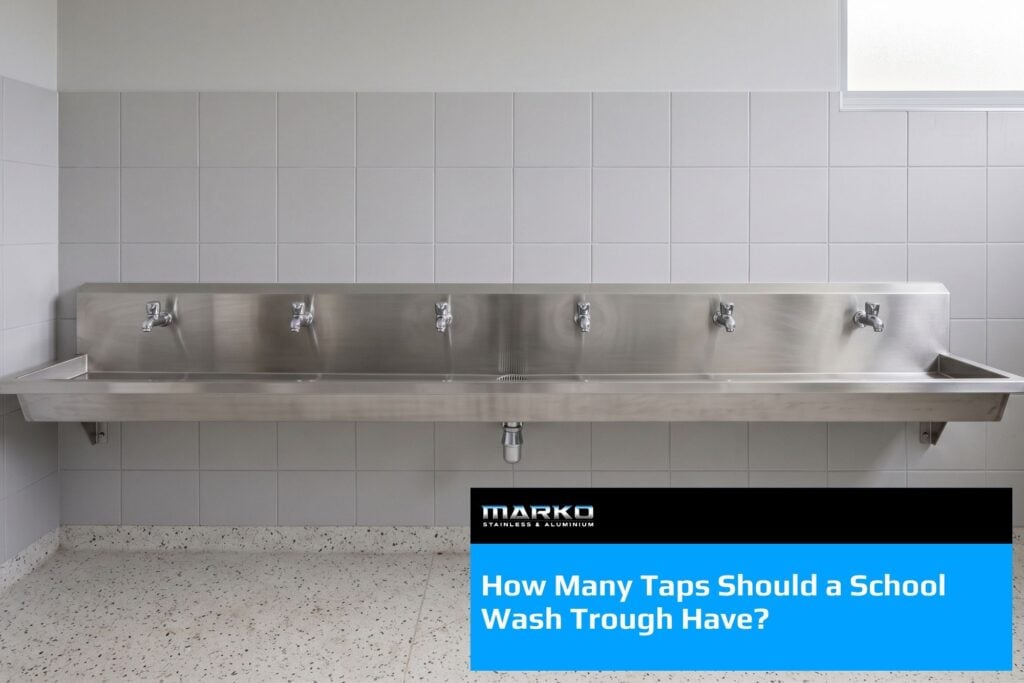
In schools, taps are commonly spaced at 400 mm centres. This spacing helps:
- allow multiple students to use the trough comfortably
- reduce overcrowding
- improve handwashing flow
- make better use of the available trough length
This is one of the most practical spacing arrangements for student use and is commonly associated with EFSG-suitable school layouts.
Commercial and Workshop Applications
In workshops, workplaces, and some commercial projects, wider tap spacing may be more appropriate. Adult users generally require more room, and some environments involve gloves, tools, or heavier-duty washing.
This is why wash trough sizing should always be considered together with the intended user group.
Other Factors to Consider
Peak User Numbers
Always think about the busiest time, not the average time. The trough should be sized for when usage is highest.
Available Wall Space
The trough should suit the room without interfering with movement, access, or surrounding fixtures.
Wall-Mounted vs Freestanding
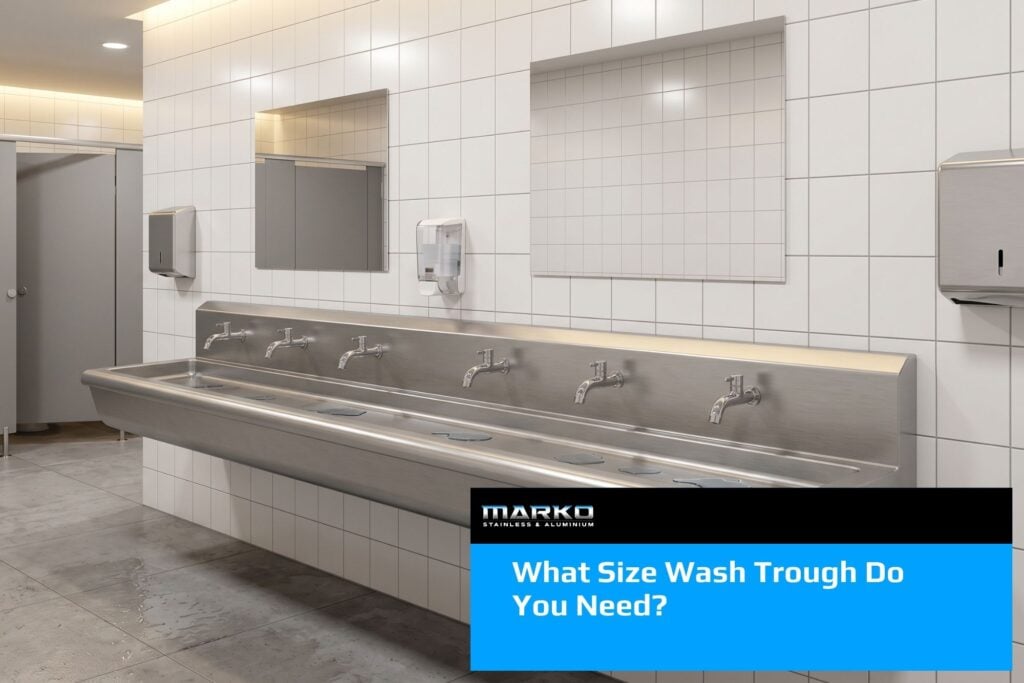
Wall-mounted troughs are often preferred indoors where cleaning access matters. Freestanding troughs can work well outdoors or where wall support is limited.
Cleaning and Splashback Requirements
Integrated splashbacks can help improve hygiene, protect walls, and make the surrounding area easier to maintain.
Standard vs Custom Wash Troughs
Standard sizes can suit some projects, but many benefit from custom stainless steel wash trough fabrication.
Custom fabrication allows for:
- exact wall-length matching
- custom tap spacing
- wall-mounted or freestanding configurations
- splashbacks and returns
- layouts designed for the actual user flow
For schools, this is often the best way to make sure the trough suits both the physical space and EFSG requirements.
Why Correct Sizing Makes a Difference
Selecting the right stainless steel wash trough size improves:
- usability
- hygiene
- cleaning efficiency
- project practicality
- long-term performance
A trough that is well-sized for the environment will generally work better from day one and continue to perform well over time.
Why Choose Marko Stainless and Aluminium?
- Practical wash trough advice: Guidance based on user numbers, spacing, and real project use
- Custom fabrication capability: Wash troughs made to suit exact dimensions and layouts
- Strong school project experience: Practical understanding of student use, durability, and EFSG-related school applications
- ASSDA accredited fabricator: Confidence in stainless steel workmanship and quality
- Established since 1994: Proven experience delivering durable stainless steel solutions
Conclusion
If you are asking what size wash trough do you need, the answer depends on the environment, the number of users, the available wall space, and the tap spacing required. In many projects, 1800 mm and 2400 mm wash troughs are the most practical starting points, while 3000 mm and longer troughs are often better for busier spaces.
For schools, choosing the right size also means making sure the trough suits EFSG requirements and performs properly for the way students actually use the space.
Call to Action
Contact Marko Stainless and Aluminium to discuss the right stainless steel wash trough size for your next school, workplace, or commercial project.
FAQ: Wash Trough Sizing
Q1: What is the most common wash trough size for schools?
Common school wash trough sizes include 1800 mm and 2400 mm, with longer troughs used in larger or busier student areas.
Q2: What tap spacing is usually used in schools?
In schools, taps are commonly spaced at 400 mm centres, which is a practical spacing for student use and EFSG-related layouts.
Q3: When should you choose a custom wash trough instead of a standard size?
A custom wash trough is often the better choice when the wall length is unusual, demand is high, or the project needs specific tap spacing, layout, or EFSG-suitable detailing.