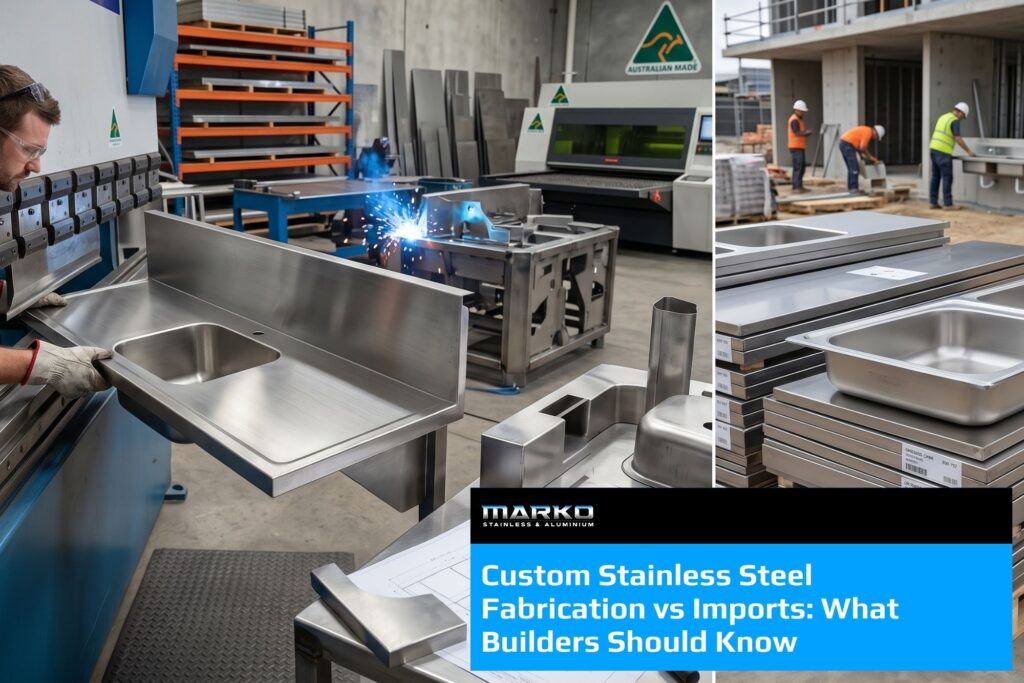
Introduction
When pricing and planning a project, builders are often faced with a familiar choice: use custom stainless steel fabrication from a local supplier, or source imported off-the-shelf products that may appear cheaper upfront.
At first glance, imports can look attractive. But in real-world construction, price is only one part of the equation. Lead times, fitment, product quality, durability, and installation issues all affect the final result. This is why many builders continue to choose custom stainless steel fabrication for schools, commercial fitouts, workplaces, and public projects.
At Marko Stainless and Aluminium, we work with builders who need stainless steel products that fit properly, perform reliably, and reduce complications on site. In many cases, custom local fabrication delivers a better overall outcome than imported alternatives.
Why Builders Consider Imports
Imported stainless steel products are often marketed as fast, simple, and cost-effective. In some straightforward applications, they may be suitable.
Builders may consider imports because:
- the initial quote appears lower
- standard products seem easier to source
- the product is available through catalogue ordering
- the project looks simple on paper
But once installation begins, the real differences between imported stainless products and custom stainless steel fabrication often become much clearer.
The Main Limitation of Imported Products
Imported stainless steel items are usually produced in standard sizes and fixed configurations. That can work if the project matches those dimensions exactly. The problem is that many commercial and education projects do not.
Common issues with imports include:
- dimensions that do not quite suit the space
- alignment problems with plumbing or cabinetry
- limited flexibility if details change
- mismatched finishes across products
- less confidence in long-term suitability
These issues can quickly turn an apparently cheaper option into a more expensive one.
Why Custom Fabrication Works Better on Real Projects
Custom stainless steel fabrication starts with the project, not the product. Instead of forcing the site to suit a standard item, the item is fabricated to suit the actual conditions.
This allows for:
- exact dimensions
- better coordination with services
- improved installation accuracy
- stronger workflow and usability
- cleaner visual results
For builders, this usually means fewer compromises and fewer surprises.
Better Fit Means Less Rework
One of the biggest advantages of custom fabrication is fit.
A product made specifically for the project is more likely to:
- align with drawings
- install cleanly
- avoid awkward gaps or site modifications
- reduce variation risk
This is especially important where stainless steel products need to integrate with:
- plumbing
- cabinetry and stainless steel benches
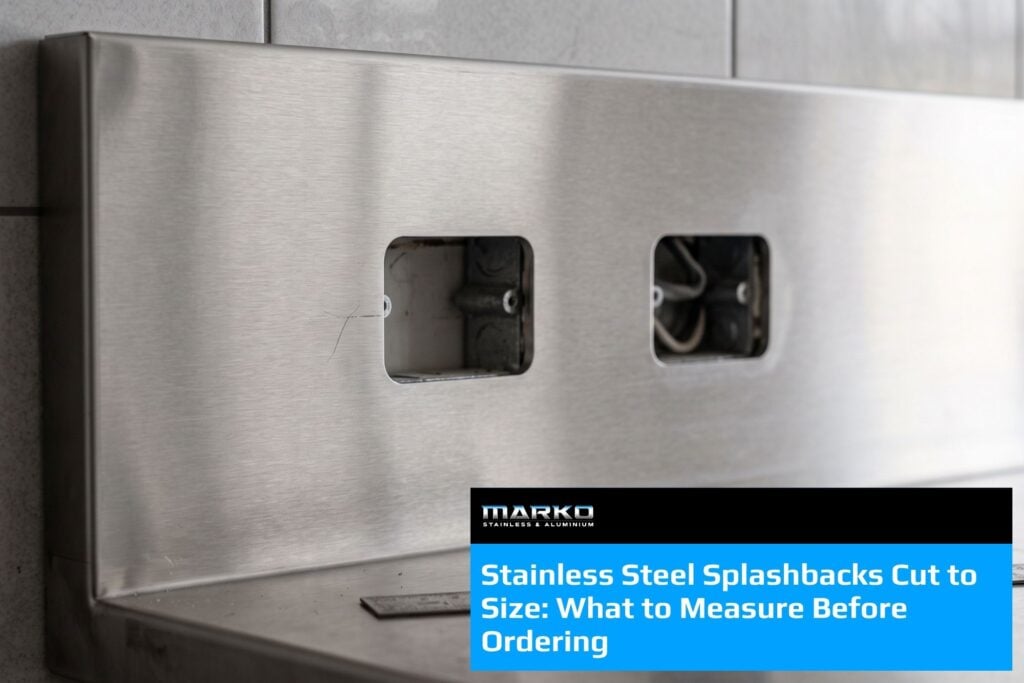
- walls and splashbacks
- tiled finishes
- drainage layouts
Imported products often require more adjustment on site. Custom fabrication is much more likely to arrive ready to work.
Lead Times Are Not Always What They Seem
Some imported products appear to offer fast availability, but that can be misleading. Shipping delays, stock issues, and limited flexibility can all affect delivery.
By comparison, Australian custom stainless steel fabrication can offer clearer communication, better visibility around lead times, faster response to design changes, and less reliance on overseas supply conditions.
For projects running on tight schedules, that reliability can be worth more than a small initial saving.
Quality, Finish, and Long-Term Performance
Not all stainless steel products are equal. Even when two items look similar in a quote or a photo, the real differences often show up later in:
- rigidity
- finish consistency
- weld quality
- ease of cleaning
- long-term durability
Builders know that poor-quality products can become defects, maintenance issues, or client complaints. Custom stainless steel fabrication offers more control over the finish, detailing, and suitability of the final product.
Imports vs Custom Fabrication in Schools and Commercial Projects
This difference is especially important in:
- school fitouts
- commercial kitchens
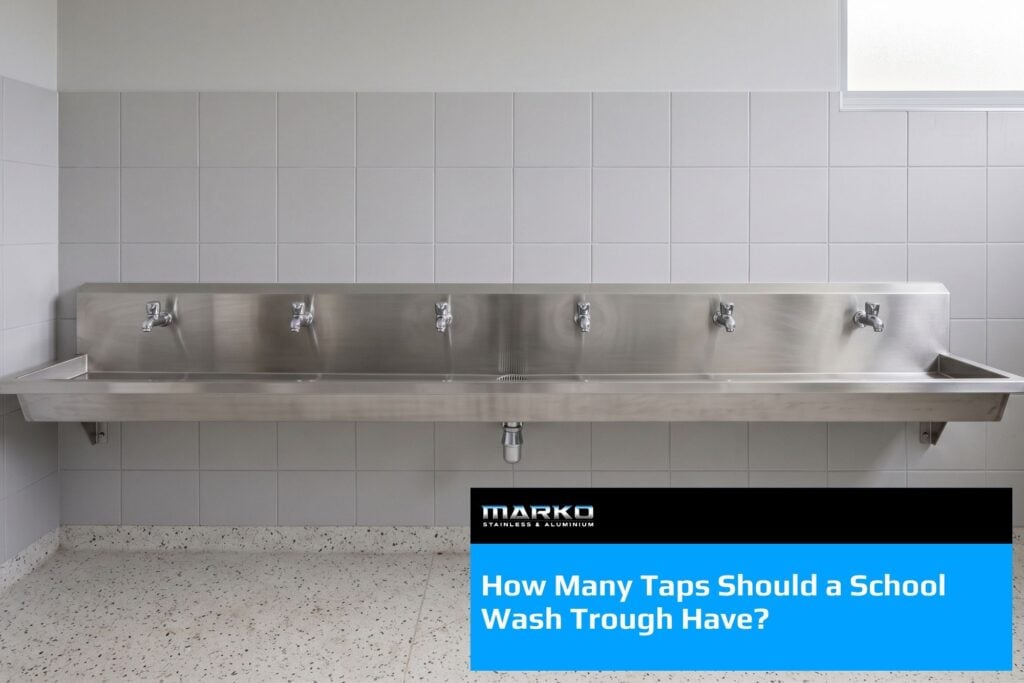
- public amenities
- workshops
- healthcare and food preparation spaces
These environments often involve:
- heavier daily traffic
- more demanding cleaning
- stronger durability expectations
- less tolerance for ongoing maintenance problems
In these settings, the best stainless steel solution is usually the one designed specifically for the project.
When Imports May Still Be Suitable
To be fair, imported stainless steel products may still be suitable when:
- the application is simple
- the dimensions are genuinely standard
- the use is light duty
- aesthetics and longevity are less critical
- no custom coordination is required
But once the project becomes more complex, higher-use, or more quality-sensitive, custom stainless steel fabrication usually becomes the smarter option.
Why Choose Marko Stainless and Aluminium?
- Project-driven fabrication: Stainless steel products made to suit the actual site, not just a standard catalogue size
- Better fit and coordination: Improved alignment with surrounding trades, services, and finishes
- Commercial and education experience: Practical understanding of high-use environments, including products suited to EFSG-related school applications
- ASSDA accredited fabricator: Confidence in stainless steel workmanship and quality
- Established since 1994: Proven experience delivering durable stainless steel solutions
Conclusion
When comparing custom stainless steel fabrication vs imports, the difference is not just the purchase price. It is the full outcome: fit, installation, durability, lead-time reliability, and long-term value.
For simple applications, imported products may sometimes be enough. But for builders working on schools, commercial fitouts, workplaces, and public projects where quality matters, custom fabrication often delivers the stronger result.
Call to Action
Contact Marko Stainless and Aluminium to discuss custom stainless steel fabrication for your next project and whether it is the right alternative to imported products.