A commercial stainless steel sink should be specified around the work being done at it, not picked off its external dimensions. Before ordering, settle the bowl configuration, internal size, position, drainage, tapware, surrounding bench details, material and installation scope.
Those decisions drive workflow, plumbing and price. Sorting them before fabrication also keeps site alterations and variations down.
What will be washed in the sink?
Start with the largest thing the sink has to take. A bowl meant for general handwashing has nothing in common with one used for stock pots, oven trays or food-preparation equipment.
Record the rough dimensions of the largest items and whether they need to sit flat, be fully submerged or just fit under the tap. Internal bowl dimensions matter more than the overall sink size because they describe the actual washing space.
Think about working depth as well. A deeper bowl holds large items and cuts splashing, but it gets uncomfortable fast if it is too deep for the user or the task.
Single, double or multiple bowls
A single bowl gives you one larger washing area. Double bowls let tasks be separated, such as washing and rinsing, or clean and dirty processes.
Specify:
- number of bowls
- whether bowls are equal or different sizes
- internal length, width and depth
- space required between bowls
- intended use of each bowl
Where standard pressed bowls will not give you the dimensions you need, a hand-fabricated stainless steel bowl can be made to suit. For a fuller comparison, see single bowl versus double bowl stainless steel sinks.
Pressed or fabricated sink bowl
Pressed bowls are formed as a complete bowl and work well where a stock size suits the application. Their rounded internal corners are easy to clean.
Fabricated bowls are made from stainless steel sheet and welded to the required dimensions. They give you far more control over length, width, depth and corner details, which is what you want for oversized equipment and awkward spaces.
Base the choice on function and dimensions rather than an assumption that one method always wins. Our pressed versus fabricated sink bowl guide explains the differences in more detail.
Where should the bowl be positioned?
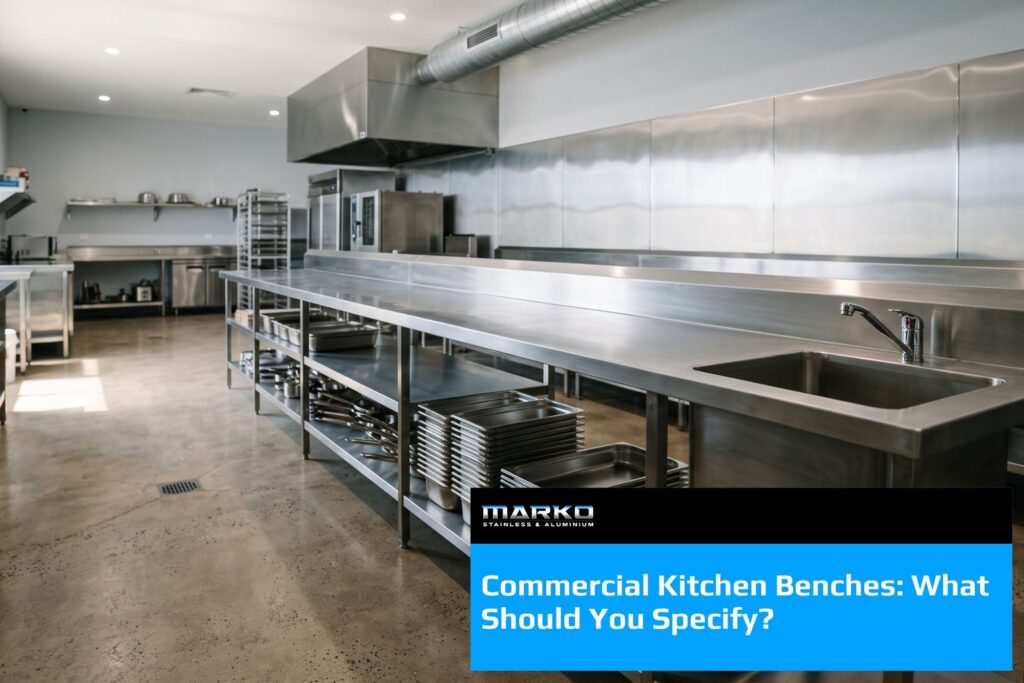
For a sink built into a stainless steel bench, nominate whether the bowl sits left, right or centre. Give dimensions from a fixed end of the bench to the bowl opening or centreline.
Consider:
- where dirty items arrive and clean items leave
- dishwasher and equipment positions
- landing and preparation space
- how staff move around the bench
- plumbing and wall services
Marko Stainless & Aluminium offers wet-lip single-bowl benches in centre, left-hand and right-hand configurations, along with double-bowl and fully custom layouts.
Specify drainboards and wet edges
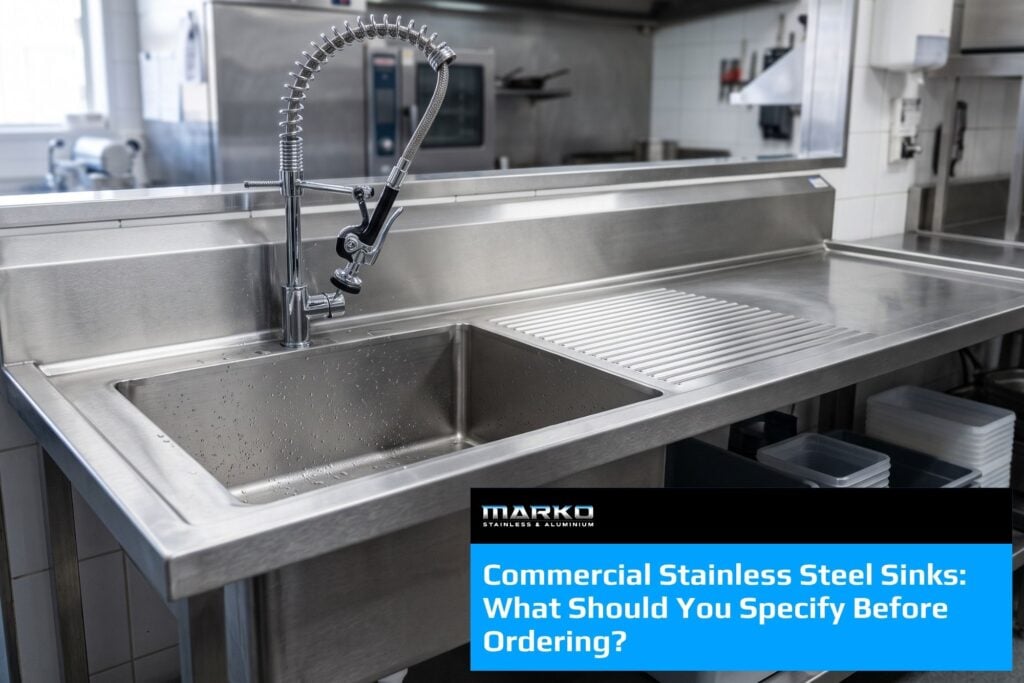
Confirm whether a drainboard is required and whether it sits to the left, the right or both sides. Include the minimum usable length and how it relates to a dishwasher or drying rack.
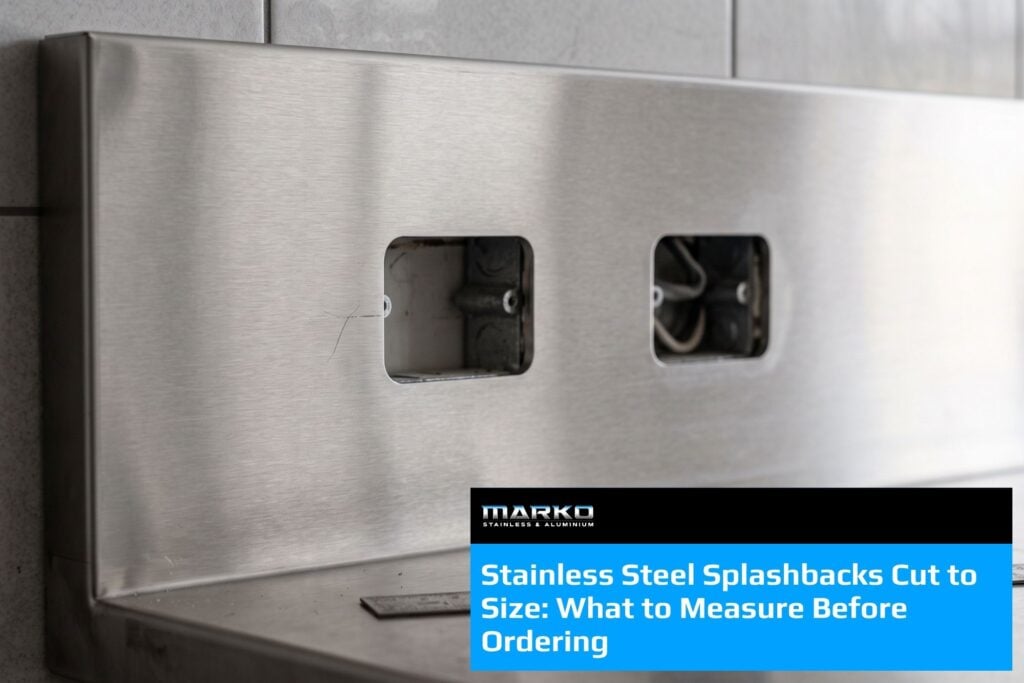
A wet-lip bench has a raised perimeter to help contain water. If a rear splashback is required, nominate its height and whether it is integral with the benchtop.
Identify undershelves, adjustable feet, cabinets or above-bench shelving in the original scope too. Adding them later usually means reworking the frame.
Confirm wastes and drainage
Specify the waste fitting, the outlet size and the position. Confirm which fitting is required, plug and waste, basket waste or something else, and who is supplying it.
Do not assume every commercial sink needs an overflow. If you want one, show it clearly. Waste positions also have to coordinate with hydraulic services, cupboards, shelves and anything else under the bench.
Tapware and service requirements
Identify whether tapware is wall-mounted, hob-mounted or installed through the sink bench. For hob-mounted tapware, provide:
- make and model
- hole diameter and quantity
- tap centres
- position relative to the bowl
- required rear clearance
Pre-rinse units, pot fillers and other large assemblies often need extra height, support or wall clearance. Confirm the selected tapware before fabrication wherever you can.
Material grade and finish
Include the nominated stainless steel grade, thickness and finish. Commercial kitchen sinks are commonly manufactured from 304 Grade stainless steel, with 316 Grade specified for more corrosive environments or particular project requirements.
The finish and grain direction should coordinate with the surrounding bench. Identify exposed welds, edge profiles and visible faces as well.
Standard 3.2.3 of the Australia New Zealand Food Standards Code sets the requirements for fixtures, fittings and equipment in food premises, including surfaces that have to be able to be cleaned and sanitised effectively. Check the FSANZ food safety standards alongside the project specification.
Supply only or installed
Confirm whether the sink is supply only, delivered, site measured or installed by the fabricator. For installation, give information about access, finished floor levels, fixing substrates, adjoining benches and when the area will genuinely be ready.
Long sink benches have to fit through doors and corridors. Access often decides whether a unit gets made in one piece or split into sections.
What to include with your enquiry
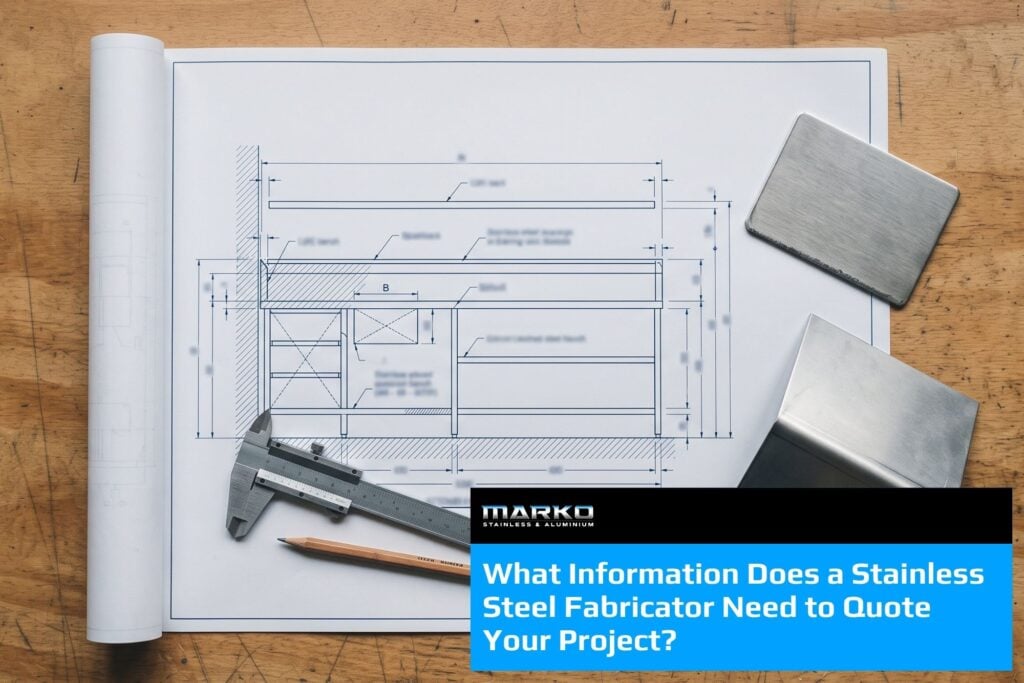
Provide a dimensioned drawing showing the overall bench, bowl dimensions and positions, drainboards, tap holes, wastes, splashbacks, shelves, frames and adjoining equipment. Include quantities, location, program, material requirements and component details.
Marko Stainless & Aluminium manufactures standard and custom commercial stainless steel sinks, integrated sink benches and hand-fabricated bowls from our Cardiff workshop. We work with builders, architects, commercial kitchen contractors, schools, healthcare facilities and hospitality businesses across Newcastle, the Hunter region and wider NSW.
Send us your drawings and sink requirements to work through the right commercial stainless steel solution for your project.