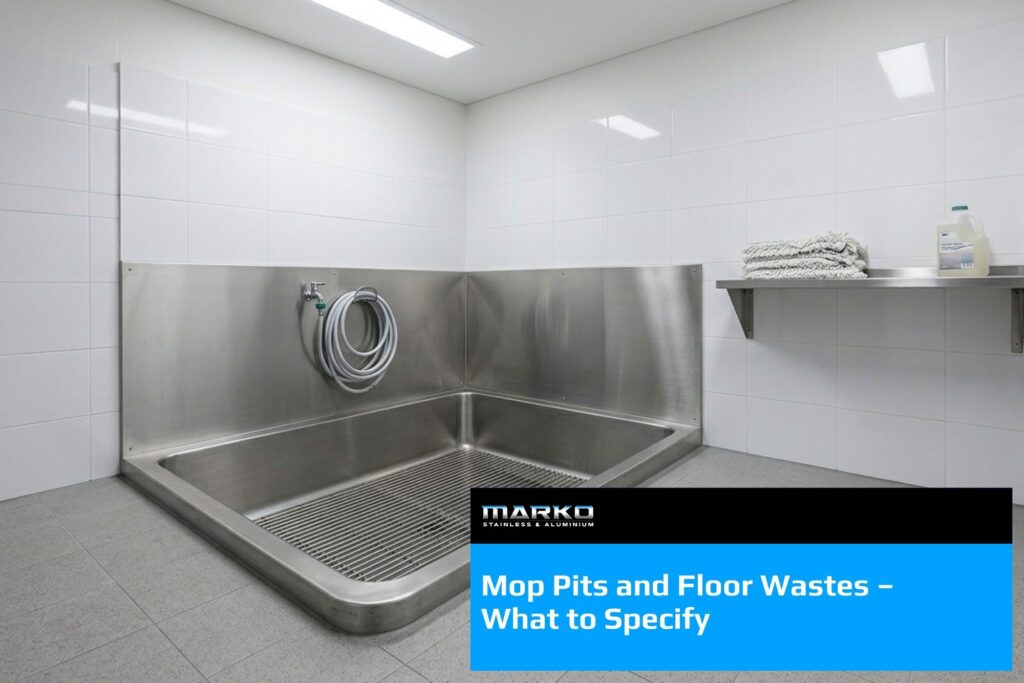
Drainage fixtures such as mop pits and floor wastes are small items in the overall scope of a project, but they play an important role in day-to-day cleaning, hygiene, and facility maintenance. If these fixtures are poorly selected or specified too generically, they can create problems that continue long after the project is complete.
At Marko Stainless & Aluminium, we fabricate stainless steel mop pits and floor wastes for schools, workplaces, commercial spaces, and public amenities. Knowing what to specify helps ensure these fixtures are practical, easy to maintain, and suited to the environment they are installed in.
The right drainage fixture should not only manage water , it should also support cleaning routines, withstand heavy use, and integrate properly with the surrounding area.
What Is a Mop Pit?
A mop pit is a low-level cleaning fixture designed to allow cleaning staff to empty buckets and wash down equipment safely and efficiently. It is typically installed in cleaners’ rooms, service areas, commercial kitchens, and support spaces.
A mop pit is different from a simple floor waste because it is intended to be an active part of the cleaning process rather than just a drainage point.
It should be practical to use, easy to clean, and durable enough for repeated daily use.
What Is a Floor Waste?
A floor waste is a compact drainage point set into the floor. Its role is to collect and remove water from a wet area.
Floor wastes are commonly used in:
- bathrooms
- cleaners’ rooms
- plant or service areas
- staff amenities
- smaller wet zones
While a floor waste may look simple, the wrong product or poor location can affect drainage performance and long-term maintenance.
Why Specification Matters
Because mop pits and floor wastes are relatively small items, they are often under-specified. But that can lead to issues such as:
- poor drainage performance
- difficult cleaning access
- damage from heavy use
- mismatch with surrounding finishes
- higher maintenance over time
A stronger specification helps make sure the product is suitable for how the space will actually operate.
What to Consider When Specifying a Mop Pit
Location and Use
Think about where the mop pit will be used and how often. A cleaners’ room in a school has different demands to a commercial kitchen wash-down area or a service zone in a public building.
The specification should reflect:
- expected cleaning frequency
- volume of water
- type of cleaning equipment used
- surrounding traffic and wear
Material Durability
A mop pit should be able to withstand repeated use, wet conditions, and cleaning chemicals. Stainless steel mop pits are often preferred because they offer:
- strong corrosion resistance
- easy cleaning
- long service life
- better durability than many alternatives
For high-use environments, durability should be a priority.
Ease of Cleaning
A mop pit is part of the cleaning process, so it should not be difficult to clean itself. Smooth stainless finishes and practical detailing help reduce dirt build-up and improve hygiene.
This is especially important in:
- school cleaners’ rooms
- commercial kitchens
- healthcare spaces
- service areas with frequent washdown
What to Consider When Specifying a Floor Waste
Water Volume
The floor waste needs to suit the amount of water expected in the area. A small floor waste may be suitable for a compact bathroom, but it may not be enough in a busier or more heavily washed space.
Floor Layout and Grading
The location of the floor waste should work with the floor grading and the way water will actually move through the space.
Maintenance Access
A floor waste should be easy to inspect and maintain. A product that drains well but is difficult to clean or access may become a long-term maintenance issue.
Standard vs Custom Solutions
In some projects, standard mop pits and floor wastes are suitable. In others, custom stainless steel fabrication provides a better result.
Custom fabrication can help where the project needs:
- non-standard dimensions
- better integration with tiles or surrounding finishes
- heavier-duty construction
- specific grate or pit details
- closer coordination with the room layout
At Marko Stainless & Aluminium, these drainage elements can be fabricated to suit the actual space rather than forcing the design around a standard product.
Why Stainless Steel Is Often the Best Choice
For mop pits and floor wastes, stainless steel remains one of the strongest material choices because it offers:
- good durability in wet environments
- easy cleaning
- long-term corrosion resistance
- a professional finish
- compatibility with other stainless fitout elements
This makes it particularly suitable for schools, commercial kitchens, public amenities, and workplace service areas.
Why Choose Marko Stainless & Aluminium?
- Practical drainage experience: Mop pits and floor wastes designed around real cleaning and wet-area use
- Custom fabrication capability: Stainless steel solutions made to suit exact layouts and site requirements
- Experience across schools, workplaces, and commercial projects: Reliable understanding of high-use cleaning and drainage environments, including products suited to EFSG-related school applications
- ASSDA accredited fabricator: Confidence in stainless steel workmanship and quality
- Established since 1994: Proven experience delivering durable stainless steel solutions
Conclusion
Knowing what to specify for mop pits and floor wastes is important because these small fixtures have a big impact on hygiene, maintenance, and day-to-day facility performance. The right product should suit the way the area is cleaned, the amount of water being managed, and the overall demands of the environment.
For schools, workplaces, commercial projects, and public amenities, stainless steel mop pits and floor wastes provide a durable and practical long-term solution.
Call to Action
Contact Marko Stainless & Aluminium to discuss stainless steel mop pits and floor wastes for your next project.