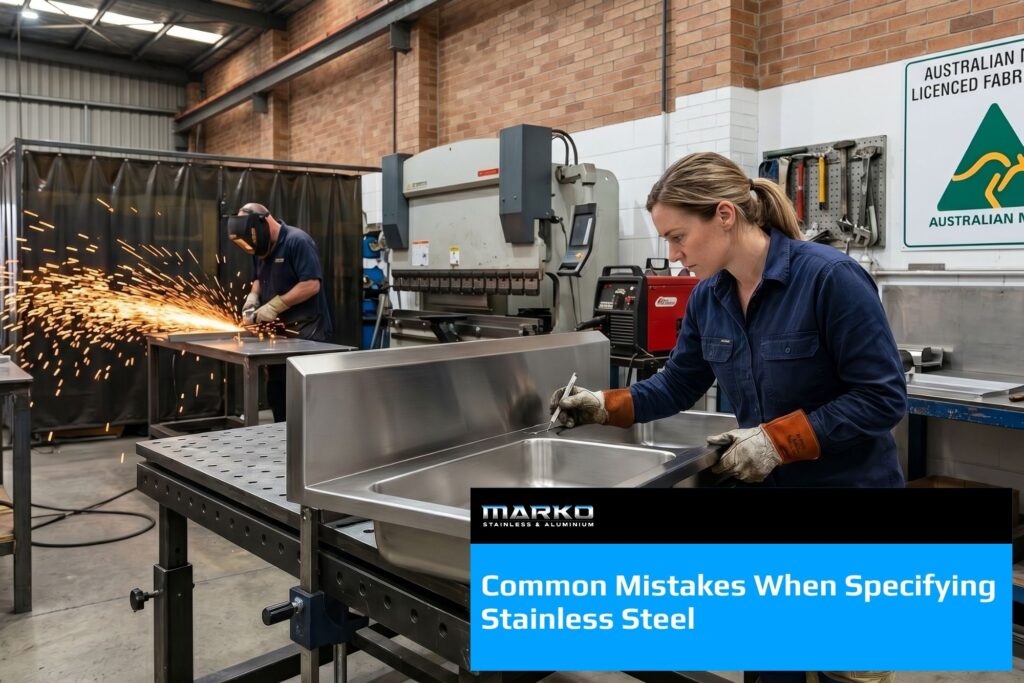
Stainless steel is widely chosen for its durability, hygiene, corrosion resistance, and professional appearance. It is used across schools, commercial kitchens, public amenities, workplaces, and industrial environments because it performs well where other materials often fail.
But while stainless steel is an excellent material, problems can still occur when it is specified incorrectly. In many cases, the issue is not the stainless steel itself , it is the way the product has been selected, designed, or detailed. That is why understanding the common mistakes when specifying stainless steel is so important.
At Marko Stainless & Aluminium, we work with builders, architects, and project teams across a wide range of sectors. In our experience, most stainless steel problems can be avoided by asking the right questions early and making sure the product is specified for the way it will actually be used.
Mistake 1: Choosing a Product Without Considering the Environment
One of the most common mistakes is choosing stainless steel products based only on appearance or budget, without properly considering the environment.
For example:
- indoor applications may have very different requirements to outdoor ones
- dry staff amenities need different solutions to wet public areas
- coastal environments may require a different approach to inland sites
If the specification does not reflect the actual environment, the product may underperform over time.
Mistake 2: Treating All Stainless Steel as the Same
Not all stainless steel applications are equal. Different projects require different grades, thicknesses, finishes, and levels of detailing.
A common mistake is assuming that one stainless steel approach will suit:
- kitchens
- schools
- workshops
- outdoor areas
- public facilities
In reality, the correct stainless steel solution depends on the level of use, the exposure, and the expected lifespan.
Mistake 3: Using Standard Products Where Custom Fabrication Is Needed
Off-the-shelf stainless steel products can work well in straightforward situations, but they are not always the best choice for complex or high-use projects.
A common specification mistake is trying to force a standard product into a layout that really needs custom stainless steel fabrication.
This can lead to:
- awkward fitment
- site modifications
- inconsistent finishes
- reduced usability
- variations during installation
Where dimensions, traffic, or coordination matter, custom fabrication is often the stronger option.
Mistake 4: Focusing Only on Initial Cost
Another common mistake is choosing the cheapest option without considering long-term performance.
A lower upfront price may lead to:
- higher maintenance
- shorter service life
- more repairs
- poorer fit and finish
- increased replacement costs over time
For schools, commercial facilities, and public spaces, lifecycle value is usually more important than the cheapest initial quote.
Mistake 5: Ignoring How the Product Will Be Used
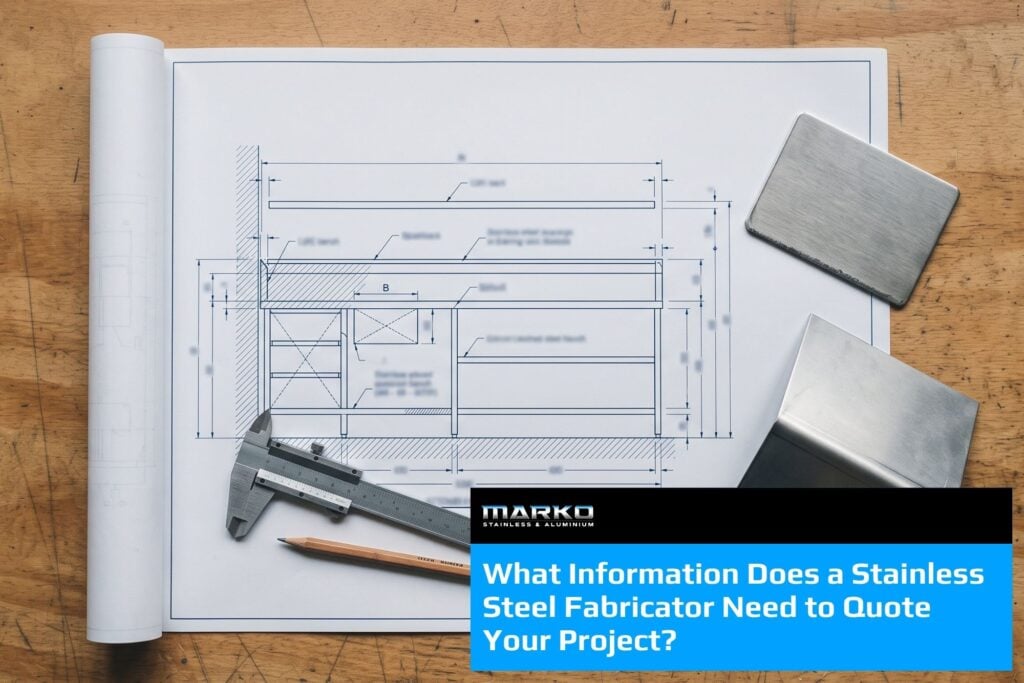
A stainless steel fixture can look correct on a drawing and still be the wrong choice in practice.
For example:
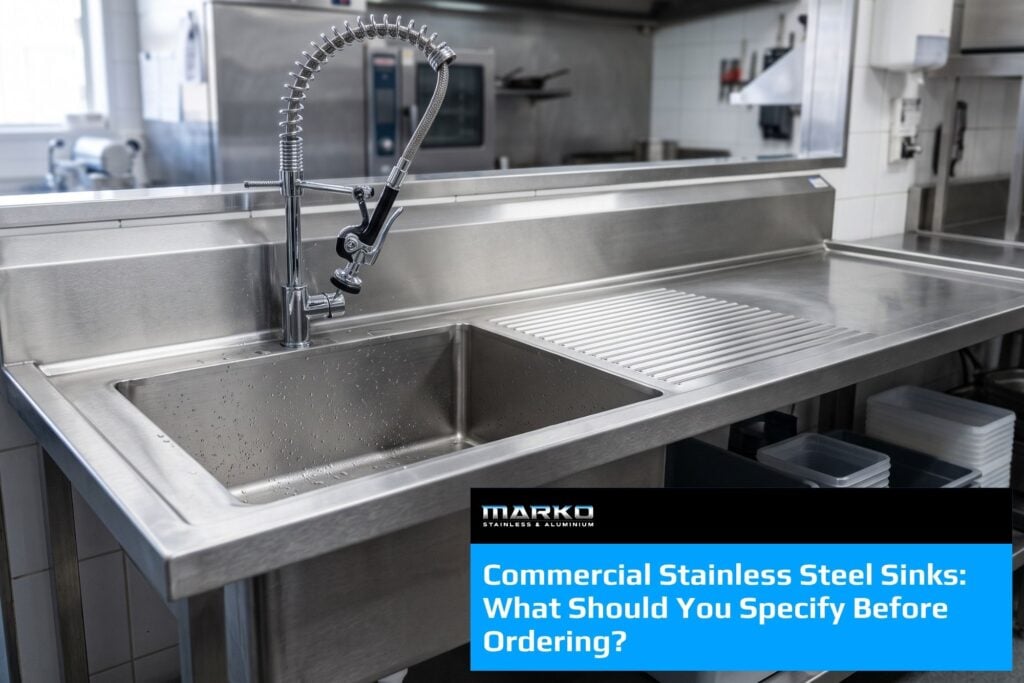
- a sink may be too small for the actual task
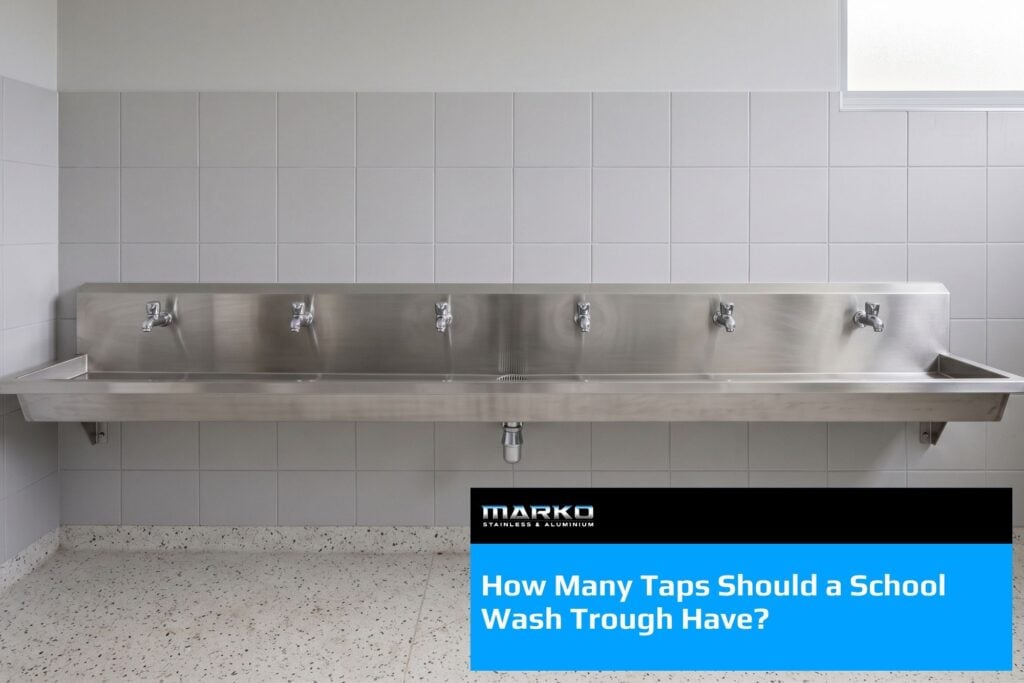
- a trough may be the wrong length for peak usage
- a bench may not suit the workflow of the room
- drainage may not match the volume of water being managed
The specification needs to reflect real use, not just theoretical layout.
Mistake 6: Poor Coordination With Other Trades
Stainless steel does not exist in isolation. It needs to work properly with:
- plumbing
- cabinetry
- wall finishes
- drainage
- power and services
- floor layouts
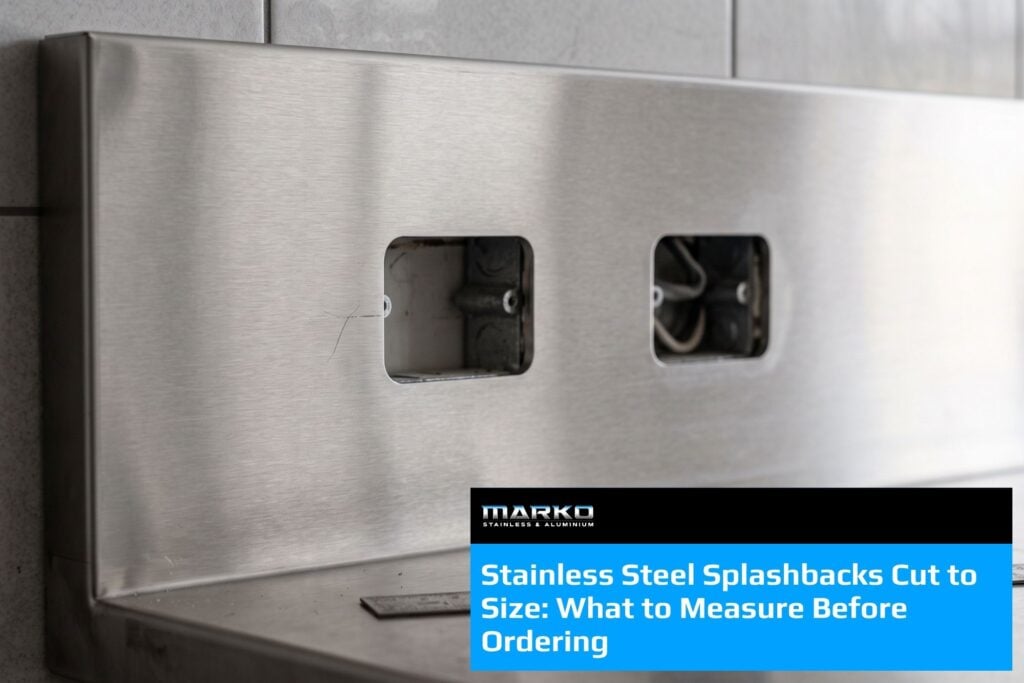
A common mistake is specifying a stainless steel product without fully considering these interfaces. This often results in:
- changes on site
- installation delays
- rework
- misalignment with surrounding finishes
Better coordination early almost always leads to a better result.
Mistake 7: Overlooking Cleaning and Maintenance
In busy environments, cleanability matters just as much as durability. Some stainless steel products are technically strong, but poorly detailed for ongoing cleaning.
Common maintenance-related mistakes include:
- unnecessary crevices
- awkward joins
- splash-prone layouts
- hard-to-access details
A stronger specification considers how the product will be maintained over time, not just how it looks at handover.
Mistake 8: Choosing a Fabricator Without Relevant Experience
The product may be stainless steel, but the fabrication experience still matters.
A fabricator who understands:
- school environments
- commercial kitchens
- public amenities
- workshops
- hygiene and durability requirements
is much more likely to produce the right result than someone simply quoting from a generic product list.
Experience helps avoid problems before they happen.
Why Better Specification Leads to Better Results
The strongest stainless steel projects are usually the ones where:
- the product suits the environment
- the design suits the use
- the finish suits maintenance demands
- the fabrication suits the real layout
- the installation is coordinated early
When these things are addressed at the specification stage, the final result is usually stronger, cleaner, and more reliable.
Why Choose Marko Stainless & Aluminium?
- Practical specification advice: Guidance based on how stainless steel products will actually be used
- Custom fabrication capability: Solutions designed to suit layouts, traffic, and long-term performance
- Relevant project experience: Strong understanding of schools, workplaces, and commercial environments, including products suited to EFSG-related school applications
- ASSDA accredited fabricator: Confidence in stainless steel workmanship and quality
- Established since 1994: Proven experience delivering durable stainless steel solutions
Conclusion
The most common mistakes when specifying stainless steel are usually avoidable. They often come down to not fully considering the environment, the application, the required durability, or the way the product integrates with the rest of the project.
By taking a more practical approach to stainless steel specification, project teams can reduce risk, improve long-term performance, and achieve better overall outcomes.
Call to Action
Contact Marko Stainless & Aluminium to discuss your next project and avoid the most common mistakes when specifying stainless steel products.
FAQ – Specifying Stainless Steel Correctly
What is the most common mistake when specifying stainless steel?
One of the most common mistakes is choosing a product without properly considering the environment or how the fixture will actually be used.
Are standard stainless steel products always suitable?
No. Standard products can work in simple situations, but custom fabrication is often better for high-use or more complex projects.
Why does fabrication experience matter?
A fabricator with relevant experience is more likely to understand durability, hygiene, layout, and installation issues before they become problems.