Specifying stainless steel fixtures is about more than choosing a material. The right specification affects durability, hygiene, maintenance, installation, and the long-term success of the project. If the specification is too vague, the final result may not suit the environment. If it is too generic, important details such as finish, support, or intended use can be missed.
For builders, architects, project managers, and facility owners, understanding how to specify stainless steel fixtures for projects helps reduce compromise and lower the risk of variations, defects, and unnecessary maintenance. At Marko Stainless & Aluminium, we work with project teams across schools, workplaces, public facilities, and commercial environments to fabricate stainless steel products that suit the intended use from the start.
A good specification does not need to be complicated, but it does need to be clear.
Start With the Application
The most important question is simple:
What is the fixture actually being used for?
A stainless steel product that works well in one environment may be the wrong choice in another. For example:
- a staff kitchenette has different needs to a commercial kitchen
- a workshop sink requires different durability to a bathroom basin
- a school wash area has different traffic demands to an office amenity
The application should guide every part of the specification, including:
- size
- thickness
- finish
- support
- installation method
- expected level of use
Without this context, a stainless steel specification is often incomplete.
Define the Environment Clearly
The surrounding environment matters just as much as the fixture itself.
When specifying stainless steel fixtures, consider whether the product will be used:
- indoors or outdoors
- in a dry or wet area
- in a food-related environment
- in a high-traffic public space
- in a school or heavy-use setting
- in a coastal or exposed location
The more clearly the environment is understood, the easier it is to specify a fixture that performs properly over time.
Be Clear on Dimensions and Layout
Standard product descriptions can hide important assumptions. If exact dimensions matter, they should be clearly stated.
This may include:
- overall size
- height
- depth
- length
- tap positions
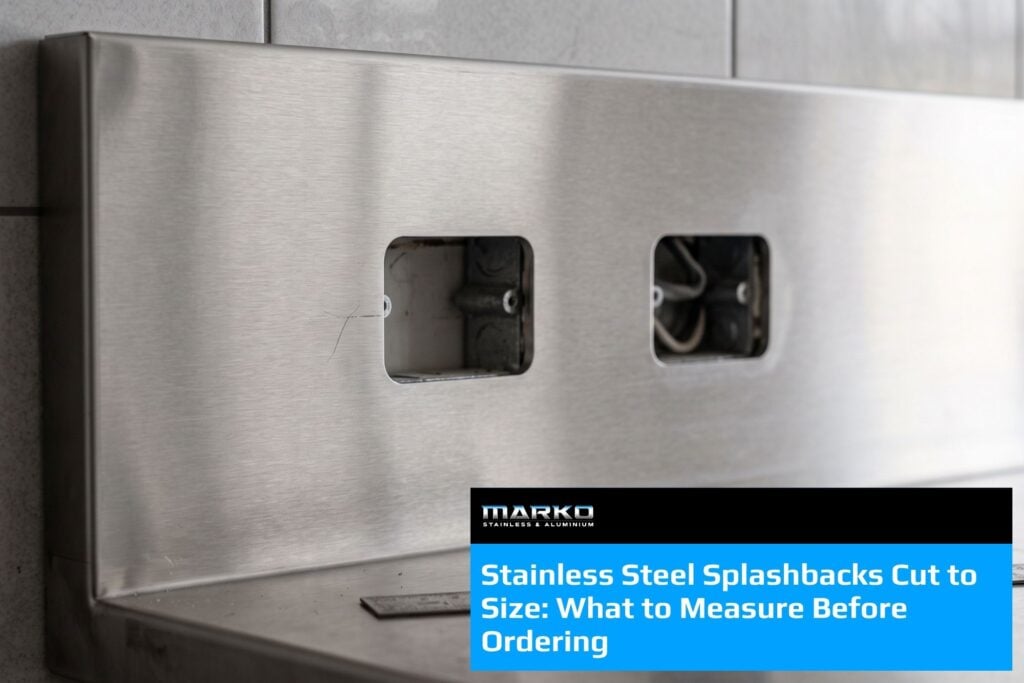
- cut-outs
- splashback details
- fixing method
For many projects, especially commercial and education fitouts, custom stainless steel fabrication gives a better result because it allows the product to suit the actual layout rather than forcing the project to fit a generic item.
Think About Traffic and Durability
A fixture in a high-use environment needs a different level of robustness than one in a low-use area.
For example, in schools, public amenities, and workplaces, the specification should consider:
- frequency of use
- number of users
- risk of impact or misuse
- maintenance expectations
- cleaning requirements
Durability should not be treated as an afterthought. It should be built into the specification from the beginning.
Include Finish and Cleanability
The finish of a stainless steel fixture affects both appearance and maintenance. Some projects prioritise aesthetics, while others place greater value on ease of cleaning and resistance to wear.
A clear specification should consider:
- practical finish selection
- visible versus concealed surfaces
- hygiene requirements
- cleaning access
- how the detail will perform over time
This helps ensure the final product is not only visually suitable, but also practical to maintain.
Coordinate With Other Trades
One of the most common reasons stainless steel fixtures create problems on site is poor coordination with surrounding work.
When specifying stainless steel products, it is important to think about how they interact with:
- plumbing
- cabinetry
- tiles and wall finishes
- drainage
- electrical or service penetrations
A fixture may be well made and still be the wrong product if the specification does not properly consider its relationship with the rest of the project.
Understand When Standard Products Are Enough
Not every project needs custom fabrication. Standard stainless steel fixtures can work well where:
- dimensions are genuinely standard
- use is relatively straightforward
- support conditions are simple
- the layout does not require custom coordination
But once the project becomes more demanding, custom stainless steel fabrication often becomes the stronger option because it reduces compromise.
Why Better Specifications Matter
A clear and considered stainless steel specification helps reduce:
- site changes
- installation issues
- maintenance problems
- product mismatches
- long-term dissatisfaction
In other words, a better specification usually leads to a better project outcome.
Why Choose Marko Stainless & Aluminium?
- Practical specification support: Guidance based on real project use, not vague generic descriptions
- Custom fabrication capability: Stainless steel fixtures made to suit actual layouts and conditions
- Experience across schools, workplaces, and commercial environments: Reliable understanding of high-use applications, including products suited to EFSG-related school applications
- ASSDA accredited fabricator: Confidence in stainless steel workmanship and quality
- Established since 1994: Proven experience delivering durable stainless steel solutions
Conclusion
Knowing how to specify stainless steel fixtures for projects is about understanding how the product will be used, where it will be installed, and how it needs to perform over time. The best specifications are clear, practical, and tailored to the real conditions of the project.
By taking the time to specify stainless steel fixtures properly, builders, architects, and facility managers can achieve better durability, smoother installation, and stronger long-term value.
Call to Action
Contact Marko Stainless & Aluminium to discuss stainless steel fixtures for your next school, workplace, or commercial project.
FAQ – Specifying Stainless Steel Fixtures
When should I specify custom stainless steel fabrication instead of a standard product?
When should I specify custom stainless steel fabrication instead of a standard product?
Custom fabrication is usually the better option when dimensions are unusual, the environment is demanding, or the fixture needs to integrate closely with surrounding finishes and services.
What should be included in a stainless steel fixture specification?
A strong specification should include the application, dimensions, layout, finish, support requirements, and expected level of use.
Why is fixture coordination important?
Good coordination helps avoid installation issues, site changes, and product mismatches with plumbing, cabinetry, and surrounding trades.