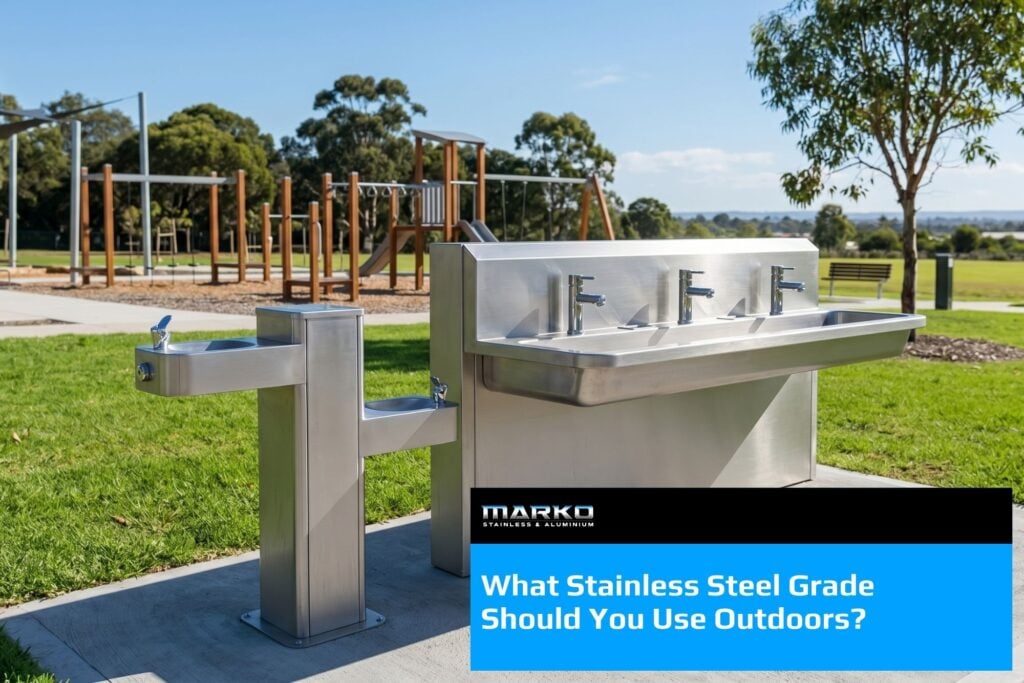
Outdoor stainless steel products need to do more than look good on the day they are installed. They need to cope with rain, humidity, dirt, pollution, and in some cases salt-laden air. That is why choosing the right stainless steel grade for outdoor use is so important.
At Marko Stainless & Aluminium, we fabricate stainless steel products for schools, workplaces, public spaces, and commercial environments. One of the most common outdoor specification questions is simple: should you use 304 or 316 stainless steel outdoors?
The answer depends on the level of exposure. Some outdoor environments are relatively mild, while others are far more demanding. Choosing the right grade from the beginning helps improve long-term performance, reduce maintenance issues, and protect the appearance of the finished product.
Why Outdoor Grade Selection Matters
Not all outdoor environments are the same. A covered courtyard in an inland area is very different to a public facility near the coastline.
Outdoor stainless steel is affected by:
- moisture
- humidity
- airborne contaminants
- dirt and debris
- rain exposure
- salt or chloride exposure in harsher locations
This is why the right grade matters. Stainless steel performs best when the grade is matched to the environment and the product is fabricated and detailed for outdoor use.
When 304 Stainless Steel Is Often Suitable Outdoors
304 stainless steel is often suitable for many lower-exposure outdoor applications.
This may include:
- inland locations
- covered external areas
- outdoor installations with lower chloride exposure
- projects where routine cleaning is realistic
- general architectural applications away from harsh marine conditions
In these environments, 304 can perform well and provide a practical balance of cost and durability.
That does not mean 304 is suitable everywhere outdoors , it means it can be a good option where the exposure is relatively moderate.
When 316 Stainless Steel Is the Better Choice
316 stainless steel is usually the stronger option where outdoor exposure is more aggressive.
This is often the better choice for:
- coastal locations
- exposed public amenities
- outdoor fixtures near salt air or sea spray
- poolside or wet external environments
- harsher applications where staining risk is higher
If the site is near the coast, more exposed to moisture and contaminants, or expected to maintain a cleaner appearance over time, 316 stainless steel is often the safer long-term option.
Coastal and Marine-Influenced Locations
Coastal environments are where grade selection becomes especially important.
Even if a product is not in direct contact with seawater, salt carried in the air can still affect the surface over time. This is why many coastal and marine-influenced applications benefit from 316 stainless steel rather than 304.
This is relevant for:
- schools near the coast
- public amenities in beachside areas
- external building features
- outdoor troughs, drainage, and exposed fixtures
- commercial and civic projects in marine environments
For these applications, choosing the correct outdoor stainless steel grade can significantly affect long-term durability and appearance.
Design Still Matters
The grade alone does not determine how well outdoor stainless steel will perform. The design also matters.
A well-designed stainless steel product should:
- avoid unnecessary water traps
- allow moisture to drain away
- reduce the build-up of dirt and salt
- minimise awkward crevices
- support easier cleaning
A poorly designed product can hold contaminants and moisture in hard-to-clean areas, increasing the risk of staining or corrosion over time.
Good design and good grade selection work together.
Cleaning and Maintenance Still Matter
A common misconception is that stainless steel outdoors never needs attention. In reality, regular cleaning helps outdoor stainless steel perform better over time.
Routine cleaning can help remove:
- dirt
- salt deposits
- grime
- residue from the environment
- other surface contaminants
This is particularly important in:
- coastal environments
- exposed public spaces
- school and workplace outdoor installations
- wet external areas
Stainless steel is still a low-maintenance material compared with many alternatives, but it is not a “fit and forget” material in harsh environments.
Common Outdoor Stainless Steel Applications
Outdoor stainless steel is commonly used for:
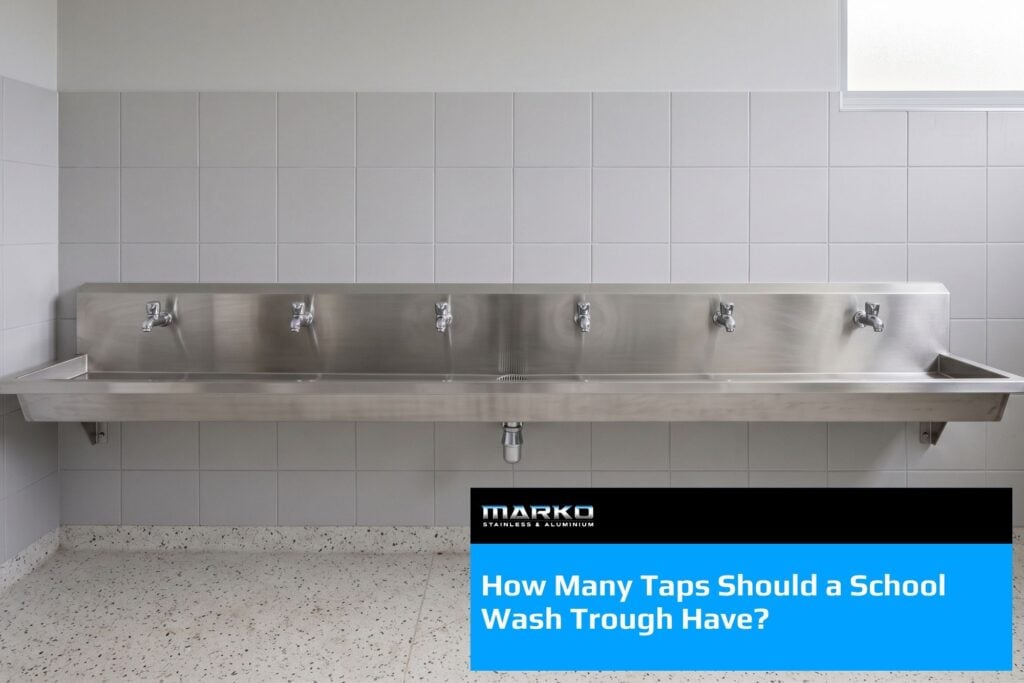
- wash troughs and handwashing areas
- drinking fountains and related fixtures
- bollards
- drainage and grates
- wall protection and architectural details
- exposed fitout elements in schools, workplaces, and public projects
In each of these cases, choosing the correct grade helps improve long-term appearance and performance.
304 vs 316 – The Practical Rule
A useful practical rule is:
- 304 stainless steel is often suitable for many inland and lower-exposure outdoor applications
- 316 stainless steel is usually the stronger choice for coastal, highly exposed, or more aggressive outdoor environments
If the project is near the coast, more exposed, or expected to stay looking good with less staining risk, 316 is often worth the extra investment.
Why Choose Marko Stainless & Aluminium?
- Practical grade selection advice: Recommendations based on the real environment, not guesswork
- Custom outdoor fabrication capability: Products made to suit exposure, layout, and end use
- Experience across schools, workplaces, and public projects: Reliable understanding of outdoor stainless performance, including products suited to EFSG-related school applications
- ASSDA accredited fabricator: Confidence in stainless steel knowledge and workmanship
- Established since 1994: Proven experience delivering durable stainless steel solutions
Conclusion
If you are asking what stainless steel grade should you use outdoors, the answer usually comes down to exposure. 304 stainless steel is often suitable for many inland and lower-risk outdoor applications, while 316 stainless steel is generally the better option in coastal, highly exposed, or more aggressive environments.
Choosing the right grade from the start helps protect appearance, improve durability, and reduce long-term maintenance issues.
Call to Action
Contact Marko Stainless & Aluminium to discuss the right stainless steel grade for outdoor use on your next project.